Uspon autoritarizma na Zapadnom Balkanu

Uspon autoritarizma na Zapadnom Balkanu

Florian Bieber

The book describes how the Western Balkans, after initial democratic hopes in the 2000s, slipped into competitive authoritarianism. It explains the mechanisms of "strongman" rule, the role of EU stabilocracy and why democracy does not consolidate.

After the fall of authoritarian leaders in the 1990s and the wave of change in the early 2000s – the fall of Milošević, Tuđman, the Đukanović transition, Gruevski – the region seemed on the path to stable democracy and European integration. But Bieber shows how competitive authoritarian regimes have instead taken hold: systems in which elections, multi-party system and opposition formally exist, but ruling elites use state resources, media and institutions to ensure lasting dominance, making real change almost impossible.

The author introduces the key concept of stabilocracy – an informal agreement between the EU and local leaders: the West tolerates the erosion of democracy, corruption and the suppression of freedoms in exchange for short-term stability (e.g. cooperation on the migrant crisis, the Belgrade-Pristina dialogue or the suppression of extremism). This pragmatics, Bieber writes, undermines the very values ​​that the EU promotes in the long term and prevents genuine transformation.

The book dissects in detail common mechanisms: control of media and public opinion, capture of courts and institutions, clientelism and corruption as a tool of government, manipulation of elections (financing, pressure on voters, media imbalance), selective persecution of the opposition and use of nationalism or identity conflicts to mobilize voters. Bieber compares the variants in different countries – from the long-term dominance in Montenegro and Serbia, through North Macedonia before 2017, to the specifics in Albania and BiH – showing how the same patterns are repeated despite different contexts.

The opening section with the ironic "Advice to the Balkan Prince" is especially strong - a sarcastic but precise guide to how to maintain power: control the media, weaken institutions, use the EU as an alibi, maintain the appearance of reforms without real change. Bieber doesn't just blame local leaders; shows how global trends (the rise of populism and authoritarianism) and the weakness of the international community (the EU's focus on stability instead of values) contribute to that process.

Naslov izvornika
The Rise of Authoritarianism in the Western Balkans
Prijevod
Nikola Petković
Urednik
Maroje Mihovilović
Dimenzije
23 x 15 cm
Broj strana
189
Nakladnik
Profil Knjiga, Zagreb, 2022.
 
Latinica. Broširano.
Jezik: Hrvatski.

Jedan primjerak je u ponudi

Stanje:Korišteno, u odličnom stanju
Dodano u košaricu!
 

Zanima Vas i neka druga knjiga? Možete pretražiti našu ponudu pomoću tražilice ili prelistati knjige po kategorijama.

Možda će Vas zanimati i ovi naslovi

Moć življenja

Moć življenja

Petrana Sabolek

The Kajkavian novel depicts the coming-of-age of a six-year-old girl in Međimurje, offering authentic memories of rural life, hard labor, the resilience of the local people, and the preservation of traditional and linguistic heritage.

Matica hrvatska, 2024.
Hrvatski. Latinica. Broširano.
9,98 €
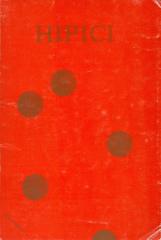
Hipici

Hipici

Mike Brake, Stuart Hall, Lewis Yablonsky, Paul Willis

The collection explores the hippie movement as a counterculture: from connections with the beatniks and psychedelia to community, alternative institutions and everyday life, revealing its ideas, divisions and resistance to dominant society.

Vlastita naklada, 1988.
Srpski. Latinica. Broširano.
8,74 €
Iz društvenih nauka

Iz društvenih nauka

Jovan Cvijić

The book presents key works by Jovan Cvijić in the fields of anthropogeography, ethnopsychology, and sociology, exploring the influence of the geographical environment, migration, and history on the mentality and lives of Balkan peoples.

Vuk Karadžić, 1965.
Srpski. Latinica. Broširano.
6,98 €
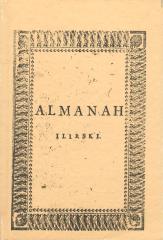
Almanah ilirski za godinu 1823.

Almanah ilirski za godinu 1823.

Juraj Matija Šporer

The first Croatian literary almanac—a precursor to the Illyrian movement—published in 1823 by Juraj Matija Šporer under the pseudonym Jure Matić. Printed in Karlovac by J. N. Prettner. A 1990 reprint with an afterword by Ivo Frangeš.

Matica hrvatska, 1990.
Hrvatski. Latinica. Tvrde korice.
32,26 €
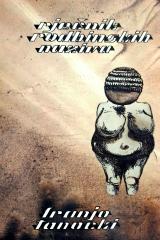
Rječnik rodbinskih naziva

Rječnik rodbinskih naziva

Franjo Tanocki

Franjo Tanocki’s unique "Dictionary of Kinship Terms" records and explains in detail a rich body of lexical material—terms denoting kinship and family ties within the Croatian language and its dialects.

Božidar Maslarić, 1983.
Hrvatski. Latinica. Broširano.
8,20 €
Religija, politika, sekularizam

Religija, politika, sekularizam

Rusmir Šadić

The scientific study Religion, Politics, Secularism (2021) by Rusmir Šadić analyzes the complex relations between religious communities, political powers and the process of secularization in contemporary society.

Logos, 2021.
Hrvatski. Latinica. Tvrde korice.
12,98 €