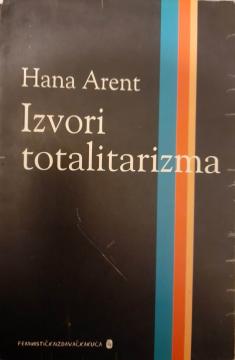
Izvori totalitarizma
Izvori totalitarizma (1951.) je remek-djelo političke filozofije i jedno od najutjecajnijih djela u politologiji 20. stoljeća. Knjiga pruža uvid u Arendtino duboko promišljanje o korijenima totalitarnih režima – nacizma i staljinizma.
Knjiga je strukturirana u tri dijela: Antisemitizam, Imperijalizam i Totalitarizam, svaki analizirajući ključne povijesne i društvene procese koji su omogućili uspon totalitarnih sustava.
Arendt istražuje povijesni razvoj antisemitizma, posebno u Europi 19. stoljeća, kao ključnog elementa koji je pripremio teren za totalitarizam. Fokusira se na Dreyfusovu aferu u Francuskoj kao primjer institucionalizirane diskriminacije i društvene polarizacije, naglašavajući kako je moderna birokracija i društvena atomizacija olakšala širenje mržnje prema Židovima.
Drugi dio bavi se europskim kolonijalnim ekspanzijama od kraja 19. do početka 20. stoljeća, povezujući imperijalističke ideologije s rasizmom, birokratskom dominacijom i dehumanizacijom. Arendt pokazuje kako su imperijalističke prakse, poput kolonijalne eksploatacije, stvorile modele upravljanja koji su kasnije prilagođeni totalitarnim režimima.
U završnom dijelu Arendt definira totalitarizam kao novi oblik vladavine koji se razlikuje od tradicionalnih diktatura. Karakteriziraju ga apsolutna kontrola, teror, propaganda i uništenje individualnosti. Nacizam i staljinizam prikazani su kao sustavi koji manipuliraju masama, ukidaju pravnu državu i koriste ideologiju za stvaranje iluzije neizbježnog povijesnog procesa. Arendt naglašava ulogu osjećaja bespomoćnosti i gubitka zajedništva u masovnim društvima, što olakšava uspon totalitarnih pokreta.
"Izvori totalitarizma" ključno je djelo za razumijevanje dinamike autoritarnih režima i opasnosti od dehumanizacije. Arendt uvodi koncepte poput "banalnosti zla" (kasnije razvijene u drugim djelima) i naglašava važnost pluralizma i političke participacije za očuvanje slobode. Knjiga je postala temelj za proučavanje totalitarizma, utječući na politologiju, sociologiju i filozofiju. Njezina analiza ostaje relevantna za suvremene rasprave o populizmu, autoritarizmu i gubitku demokratskih vrijednosti.
"Nekoliko godina prije 1933. Hannah Arendt je znala da će se dogoditi ono što sam ja smatrao nemogućim. Kad je došla 1933. ona je znala koliko će dalekosežna ta promjena biti." - Karl Jaspers
Izvadak iz djela: "Jedna od najupadljivijih odlika totalitarnih pokreta, ali i slave njihovih vođa, jeste zapanjujuća brzina kojom oni padaju u zaborav i lakoća sa kojom se mogu zameniti. Dok je Staljin tek posle mnogo godina ogorčene unutarpartijske borbe i velikih (mada samo nominalnih) ustupaka svom prethodniku uspeo da sebe proglasi Lenjinovim legitimnim političkim naslednikom, Staljinovi naslednici pokušali su to da izvedu i bez nominalnih ustupaka prethodniku, iako je Staljin imao trideset godina vremena, a i propagandnu mašineriju kakva je bila nepoznata u Lenjinovo vreme. Isto važi i za Hitlera, čija je privlačnost navodno bila neodoljiva, a koji je danas, poražen i mrtav, toliko pao u zaborav da jedva i igra neku ulogu čak i među neofašističkim i neonacističkim grupama u posleratnoj Nemačkoj."
Im Angebot sind keine Exemplare vorhanden
Das letzte Exemplar wurde kürzlich verkauft.