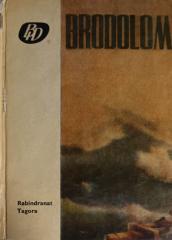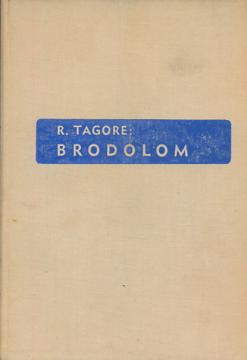
Brodolom
Antikvitet
Retka knjiga

Brodolom

Rabindranath Tagore

Shipwreck (1906) is a novel about fate and chance. After a shipwreck, Ramesh and Kamala begin a life together, believing they are married. The novel explores the conflict between duty, love, identity, and social norms in colonial Bengal.

Rabindranath Tagore (1861–1941), an Indian Nobel laureate in literature (1913), published the novel Noukadubi (Shipwreck) in 1906. The story is set in Bengal at the beginning of the 20th century. The protagonist, Ramesh, a young lawyer and intellectual, is in love with the educated Hemnalini. However, at his father's request, he agrees to an arranged marriage with an unknown girl, Susheila. On the way back from the wedding, their ship is shipwrecked in a storm. Ramesh survives with the girl he believes to be his wife, but she is actually Kamala – the young bride of another man (Nalinaksha) who also survived.

The novel unfolds as a subtle drama of identity, duty and love. Ramesh, faced with a moral dilemma, does not immediately reveal the truth to Kamala, but takes her into his home. A deep but platonic relationship full of tenderness and respect develops. In the meantime, Hemnalini and Nalinaksha go through their own sufferings and searches.

Tagore masterfully intertwines personal destinies with social themes: traditional marriages, the position of women in Indian society, the clash of modern ideas and conservative customs, fate and coincidence. The novel is psychologically deep, lyrical and humane, without cheap melodrama. It is especially strong in the depiction of female characters – Kamala and Hemnalini – who carry inner strength and dignity.

Shipwreck is one of Tagore's most famous prose works, often adapted for film. In the Croatian edition by Ante Velzek, it became part of the popular Catholic-bourgeois reading audience in the 1940s. The work still fascinates today with the universality of the theme: how much we are determined by coincidences and what price we pay for respecting duty versus our own happiness.

Naslov originala
The Wreck
Prevod
Filip M. Dominiković
Dimenzije
20 x 14 cm
Broj strana
323
Izdavač
Nakladni zavod Ante Velzek, Zagreb, 1940.
 
Latinica. Tvrde korice s omotom.
Jezik: Hrvatski.

Jedan primerak je u ponudi

Stanje:Korišćeno, u vrlo dobrom stanju
Oštećenja / nepogodnosti:
  • The cover is missing
Dodato u korpu!
 

Zanima Vas i neka druga knjiga? Možete pretražiti našu ponudu pomoću pretrage ili prelistati knjige po kategorijama.

Možda će Vas zanimati i ovi naslovi

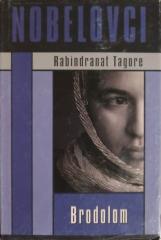
Brodolom

Brodolom

Rabindranath Tagore

Der Roman „Wreck“ (1906), das Werk eines indischen Nobelpreisträgers, ist eine Geschichte, die im kolonialen Indien spielt und in einer komplexen Handlung voller unerwarteter Wendungen Themen wie Liebe, Identität, Tradition und moralische Dilemmata behand

Svjetlost, 1963.
Srpski. Latinica. Tvrde korice.
4,36
Brodolom

Brodolom

Rabindranath Tagore
Vega media, 2004.
Srpski. Latinica. Tvrde korice s omotom.
6,995,24
Himna čoveku

Himna čoveku

Rabindranath Tagore
Izdavačko preduzeće "Rad", 1977.
Srpski. Latinica. Broširano.
3,20
Žena koja je slikala kanom

Žena koja je slikala kanom

Alka Joshi

„Die Frau, die mit Henna malte“ ist der Debütroman der indisch-amerikanischen Autorin Alka Joshi und der erste Teil ihrer Jaipur-Trilogie. Der Roman wurde für seine authentische Darstellung der Kultur Rajasthans und das universelle Thema der weiblichen Em

Mozaik knjiga, 2021.
Hrvatski. Latinica. Broširano.
13,22
Pančatantra: u najstarijoj sačuvanoj recenziji Tantrakhjajika

Pančatantra: u najstarijoj sačuvanoj recenziji Tantrakhjajika

Das Panchatantra ist ein Werk der klassischen Sanskrit-Literatur, das zwischen dem 3. und 5. Jahrhundert n. Chr. verfasst wurde. Laut erhaltenen Manuskripten und zahlreichen Bearbeitungen entwickelte es sich später zu einem populären Volksbuch.

Naprijed, 1999.
Hrvatski. Latinica. Tvrde korice.
22,76
Arktička pradomovina Veda

Arktička pradomovina Veda

Bal Gandahar Tilak

Das Buch „Die arktische Heimat der Veden“ (1903) des indischen Gelehrten Tilak stellte die Hypothese auf, dass die alten Arier, die Autoren des Rigveda, aus der Arktis stammten. Obwohl umstritten, bleibt das Buch für die Erforschung vedischer Texte und de

NIRO Književne novine, 1987.
Srpski. Latinica. Broširano.
17,56