Agatha Christie
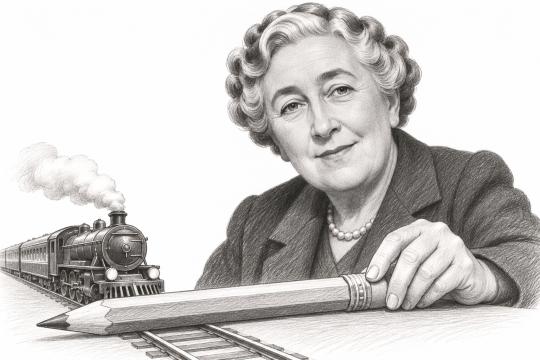
A train is stuck in the snow, one passenger is dead, and almost everyone has an explanation ready for where they were. In Murder on the Orient Express (1934), Agatha Christie (1890–1976) turns a railway carriage into a stage where a seemingly trivial detail can change the meaning of an entire account. Readers can weigh the clues alongside the detective. Part of the pleasure of rereading is seeing how much was in plain sight all along.
Christie was born in Torquay as Agatha Mary Clarissa Miller. During the First World War she worked in a hospital and qualified as a dispenser. Her knowledge of medicines and poisons later helped her devise her plots. Her first novel, The Mysterious Affair at Styles (1920), introduced the Belgian detective Hercule Poirot. Ten years later, Miss Marple took a leading role in a novel for the first time in The Murder at the Vicarage (1930).
Poirot picks out contradictions in people’s accounts, while Miss Marple compares new cases with people and events from her own village. In The Murder of Roger Ackroyd (1926), Christie shows how much a mystery depends on who tells the story. In Death on the Nile (1937), passengers aboard the same boat carry different versions of a shared past. In And Then There Were None (1939), a group is cut off on an island, and each death deepens suspicion among the survivors.
Christie travelled to the Middle East with her second husband, the archaeologist Max Mallowan. Her experience of excavations found its way into Murder in Mesopotamia (1936). As Mary Westmacott, she published novels centred on personal relationships. She also wrote for the theatre. The Mousetrap opened in London in 1952, and audiences are asked at the end to keep the solution a secret.
Titles in our offer
Leš u biblioteci
U ranim jutarnjim satima u biblioteci dvorca naći će se leš mlade devojke koju niko ne poznaje. Odakle je došla? Kako je stigla do biblioteke? I ko bi uopšte u toj kući mogao da je želi mrtvu? Činjenice se, naizgled, ne mogu povezati...

Leš u biblioteci
U ranim jutarnjim satima, telo mlade devojke koju niko ne poznaje pronađeno je u biblioteci jedne vlastelinske kuće. Odakle je došla? Kako je dospela u biblioteku? I ko je u toj kući mogao želeti njenu smrt? Činjenice se, izgleda, ne mogu povezati...

Mačka među golubovima
Do poslednje stranice ovog uzbudljivog romana čitalac ne sluti ko je zločinac, a onda spadaju maske s lica koja su nam bila stalno pred očima. Poaro i jedna hrabra devojčica likuju...

Misterija plavog voza
Putovanje luksuznim vozom prekida ubistvo američke naslednice i krađa vrednih rubina. Čuveni detektiv Herkul Poaro mora da raspetlja mrežu tajnih strasti i laži.
Nesreća nevinih
Po mišljenu autorice Nesreća nevinih (1958) je, uz Zlu kuću, najbolji roman koji je napisala. Radnja romana se fokusira na posljedice nakon što se otkrije da je čovjek osuđen za ubojstvo bio nevin.
Pustolovina božićnog pudinga
Pustolovina božićnog pudinga (1960.) je zbirka šest kriminalističkih priča Agathe Christie, u kojima pet slučajeva rješava Hercule Poirot, a jedan Miss Marple.
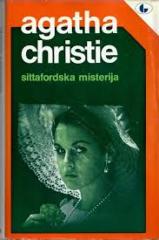
Sittafordska misterija
Tijekom spiritističke seanse u snijegom zametenom engleskom selu objavljena je smrt kapetana Trevelyana. Kada se proročanstvo obistini, započinje istraga ubojstva punog tajni i neočekivanih obrata.

Tajanstveni gospodin Quin
Tajanstveni gospodin Quin je zbirka od 12 kratkih priča Agathe Christie. Svaka priča opisuje drugi slučaj koji je riješen interakcjiom između g. Satterthwaitea i eponimoznog g. Quina koji se magično pojavi baš u najnapetijem trenutku, a nestane isto tako.
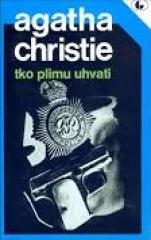
Tko plimu uhvati
Tko plimu uhvati (1948.) je roman Agathe Christie s Herculeom Poirotom. Radnja se odvija u poslijeratnoj Engleskoj, istražujući pohlepu, obiteljske tajne i ubojstvo. Christie istražuje pohlepu i moralne dvojbe, uz Poirotovu briljantnu dedukciju.
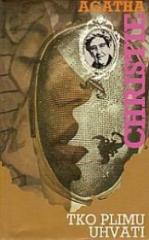
Tko plimu uhvati
The Tide Catcher (1948) is a novel by Agatha Christie featuring Hercule Poirot. Set in post-war England, it explores greed, family secrets, and murder. Christie explores greed and moral dilemmas, with Poirot's brilliant deduction.