Marija Jurić-Zagorka
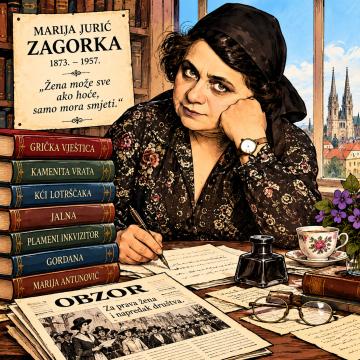
Marija Jurić Zagorka (1873–1957), a Croatian writer, journalist, and women's rights activist, was born on March 2, 1873, in Negovec near Vrbovec, and died on November 30, 1957, in Zagreb. She is considered the first Croatian professional female journalist, a pioneer of the popular historical novel, and one of the most widely read Croatian authors.
She grew up in the Hrvatsko Zagorje region and was educated in Varaždin and Zagreb. Despite family pressures and social prejudices, she chose to dedicate herself to writing and journalism. In 1896, she began working for the Zagreb newspaper Obzor, where she distinguished herself through political articles, reportage, and feuilletons. She advocated for gender equality, the right to education, and political freedom, while opposing social discrimination.
She achieved literary fame through serialized historical novels that combined suspenseful plots, romantic entanglements, historical events, and strong female characters. Notable among her early works are Roblje (1899) and Kneginja iz Petrinjske ulice (1910)—one of the first Croatian crime novels.
Her most famous work, the Grička vještica (The Witch of Grič) cycle (1912–1914), is set in 18th-century Zagreb and deals with witch trials, social injustices, and the struggle for freedom. Her novels Kći Lotrščaka (1921), Gordana (1934–1935), and Jadranka, as well as the extensive historical cycle Republikanci, also achieved great popularity.
In the novel Plameni inkvizitori, she depicts religious intolerance and the abuse of power, while Jalnuševčani offers a satirical look at social relations. In her works, history becomes a stage for the conflict between love, justice, authority, and personal freedom.
In 1925, she launched Ženski list—the first Croatian magazine for women edited by a woman—and in 1939, the magazine Hrvatica. Through her public work, she contributed to the development of women's journalism and the emancipation movement.
Zagorka’s body of work is characterized by narrative dynamism, social criticism, patriotism, and feminist consciousness. Her novels remain an important part of Croatian popular literature and cultural heritage.
Naslovi u ponudi

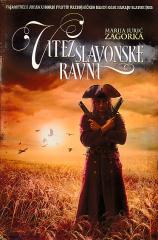
Vitez slavonske ravni
Der Ritter, bekannt für seine Masken und pyrotechnischen Tricks, mit denen er Banditen verscheucht, wird zur Legende und erhält aufgrund seiner Schnelligkeit und Mysteriösität den Spitznamen „der Elf“.