Henrik Ibsen

Henrik Johan Ibsen (1828–1906), a Norwegian playwright and poet, was born on March 20, 1828, in Skien and died on May 23, 1906, in Kristiania (present-day Oslo). He is considered one of the founders of modern European drama and one of the most influential playwrights of the 19th century. His works explore social hypocrisy, the status of women, personal freedom, and the conflict between the individual and the community.
He grew up in a family that suffered financial ruin. As a young man, he worked in a pharmacy in Grimstad, where he began writing. He published his first play, Catiline (1850), under a pseudonym. He worked in theaters in Bergen and Kristiania, gaining experience in dramaturgy and directing.
In 1864, he left Norway and lived in Italy and Germany for nearly three decades. During this period, he wrote the works that brought him international acclaim. The dramatic poems Brand (1866) and Peer Gynt (1867) explore identity, idealism, responsibility, and the meaning of human existence.
A turning point in his body of work is marked by the play The Pillars of Society (1877), followed by A Doll's House (1879), also known as Nora. The story of a woman who leaves her marriage to achieve independence sparked intense social debate and became a symbol of women's emancipation. In the plays Ghosts (1881) and An Enemy of the People (1882), Ibsen exposes moral prejudices, social lies, and the conflict between truth and the interests of the majority. The works The Wild Duck (1884) and Rosmersholm (1886) present complex psychological conflicts, while Hedda Gabler (1890) depicts the tragic fate of a woman constrained by social expectations.
Notable among his later works are The Master Builder (1892), Little Eyolf (1894), John Gabriel Borkman (1896), and When We Dead Awaken (1899).
Ibsen's style is characterized by realistic dialogue, psychological depth, symbolism, and the gradual revelation of the characters' pasts. His plays transformed European theater, replacing conventional plots with serious moral and social issues.
Henrik Ibsen left a lasting impact on modern dramaturgy, theatrical realism, and psychological drama, and his works continue to be performed on stages around the world today.
Naslovi u ponudi
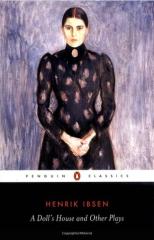
A Doll's House and Other Plays
Delivering three distinct and powerful visions of characters who choose to defy convention in the pursuit of happiness, Henrik Ibsen's A Doll's House and Other Plays is translated with an introduction by Peter Watts in Penguin Classics.
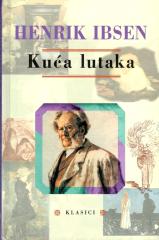
Kuća lutaka
A Doll's House (1879) by Norwegian playwright Henrik Ibsen is considered a masterpiece of realism and feminist literature. Set in 19th-century Norway, it follows Nora Helmer, the wife of banker Torvald.