Aleksandar S. Puškin
Alexander Sergeyevich Pushkin (1799–1837), a Russian poet, prose writer, and playwright, is considered the father of modern Russian literature. Born in Moscow to a noble family of African descent on his mother’s side, Pushkin grew up in a cultured environment. He was educated at the Tsarskoye Selo Lyceum, where he developed a love of literature. His rebellious spirit and politically engaged verse led to his exile in 1820, when he was sent to southern Russia. He later lived under government surveillance, but he continued to produce his most significant works.
Pushkin’s oeuvre includes poetry, prose, and drama. The verse novel Eugene Onegin (1825–1832) is a masterpiece of Russian realism, exploring love, boredom, and fate. Poems such as The Bronze Horseman (1833) and Ruslan and Lyudmila (1820) established his fame, combining romantic passion and folk motifs. The plays Boris Godunov (1825) and The Little Tragedies (1830) display psychological depth and historical themes. Prose works such as The Queen of Spades (1834) and The Captain's Daughter (1836) introduce realistic narrative to Russian literature.
Pushkin's language, elegant and precise, shaped the modern Russian literary language. His influence extends to Dostoevsky, Tolstoy, and beyond. His life was marked by a passionate nature, love affairs, and debt. In 1837, he was mortally wounded in a duel defending the honor of his wife Natalia. He died at the age of 37, leaving an indelible mark.
In Croatia, Pushkin's works are available in translation, where Ivan Slaming and other translators convey his poetic power. Pushkin remains a symbol of the Russian soul and universal literary genius.
Naslovi u ponudi

Bajke: Bajka o ribaru i ribici / Priča o popu i njegovu radniku Baldi
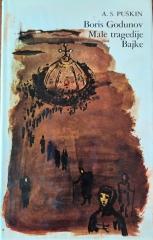
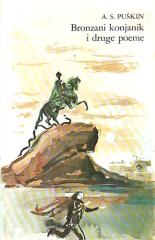

Izabrana djela, sv. I.: Dramske slike i poeme
Der erste Band der ausgewählten Werke Puschkins enthält dramatische Bilder und Gedichte: von Szenen aus Faust, Mozart und Salieri bis hin zu Der eherne Reiter und Poltawa, die Drama, Lyrik und Geschichte miteinander verbinden.
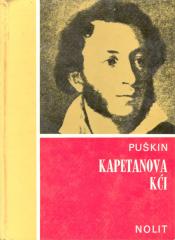
Kapetanova kći
„Die Hauptmannstochter“ ist ein historischer Roman des russischen Schriftstellers Alexander Puschkin. Er erschien erstmals 1836 in der vierten Ausgabe der Literaturzeitschrift „Sowremennik“. Der Roman ist eine romantisierte Darstellung des Pugatschow-Aufs
Kapetanova kći i druga djela
Die Sammlung vereint Pushkins Lyrik und Prosa, von intimen Gedichten über Kurzgeschichten bis hin zum Roman „Die Hauptmannstochter“, und zeigt die Bandbreite seines Talents, seine stilistische Eleganz und seine anhaltende literarische Kraft.