Albert Soboul
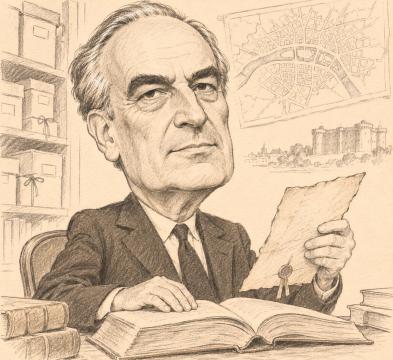
Albert Soboul (Ammi Moussa, Algeria, 27 April 1914 – Nîmes, 11 September 1982) was a French historian and a leading twentieth-century scholar of the French Revolution. Educated in France, he passed the history agrégation in 1938 and initially taught in secondary schools. During the Second World War, the Vichy authorities dismissed him from teaching because of his political activities.
His scholarly development was strongly influenced by Georges Lefebvre. He completed his doctorate on the Parisian sans-culottes in 1958, joined the University of Clermont-Ferrand in 1960 and became professor of the history of the French Revolution at the Sorbonne in 1967, holding the chair until his death.
His major study, Les Sans-culottes parisiens en l’an II (1958), examines the Parisian popular movement of 1793–1794. Artisans, shopkeepers and workers emerge as political actors with distinctive demands and practices. Their relationships with Jacobin government are explored through food supplies, prices, equality and political participation.
His Précis d’histoire de la Révolution française (1962) reached a broad international readership and was subsequently revised and published as La Révolution française. Other important works include La Civilisation et la Révolution française (1970–1983) and Problèmes paysans de la Révolution, 1789–1848 (1976). He also edited historical documents and contributed to the journal Annales historiques de la Révolution française.
Soboul represented a Marxist, social-historical interpretation of the Revolution, emphasising bourgeois transformation alongside the independent significance of popular movements. His conclusions generated substantial historiographical debate. His enduring contribution lies in extensive archival research that placed ordinary people’s material needs, collective organisation and political actions at the centre of revolutionary history.
Naslovi u ponudi
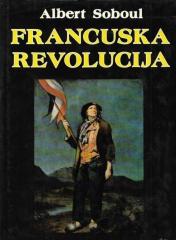
Francuska revolucija: Historijski pregled
Albert Soboul traces the French Revolution from the crisis of the Old Regime to Napoleon’s coup in 1799, connecting political events with social conflict, economic change and popular mobilisation.