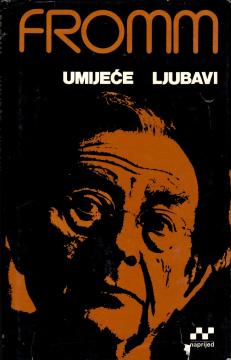
Umijeće ljubavi

In the book *The Art of Loving*, Erich Fromm explores love as a skill that requires knowledge, effort, and responsibility. He distinguishes between different forms of love and emphasizes maturity, respect, and the overcoming of loneliness.
The book The Art of Loving (1956), by the German-American psychoanalyst and philosopher Erich Fromm (1900–1980), is one of the most influential works in humanistic psychology and the philosophy of love. The text explores love as an active capacity, an art, and a fundamental human need, rather than merely as a feeling or a spontaneous emotional attraction.
Fromm posits that love is an art requiring knowledge, discipline, patience, concentration, and dedication. He challenges the common belief that the most important task is finding the "right" person, emphasizing instead that the crucial step is developing one’s own capacity to love. He views love as a response to human separateness, loneliness, and the need to connect with others.
The author distinguishes between brotherly love, motherly love, erotic love, self-love, and love for God, analyzing their psychological, social, and spiritual dimensions. He highlights four fundamental elements of mature love: care, responsibility, respect, and knowledge. Mature love allows for intimacy without the loss of personal autonomy.
Fromm critiques consumer society, the commodification of interpersonal relationships, and the conflation of love with possession, warning that modern individuals often mistake superficial attraction and social success for genuine connection.
The Art of Loving presents a philosophical-psychological treatise on emotional maturity, freedom, and responsibility, emphasizing that love is not merely a relationship with one individual, but rather an attitude toward life that is developed through conscious work on oneself and on one's relationships with others.
Jedan primjerak je u ponudi
- Slight damage to the dust jacket