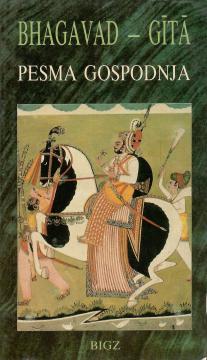
Bhagavad-Gita: Pesma gospodnja
Marković's translation of the Bhagavad-Gita (1980) is the first rendition of this philosophical-religious epic in the Serbian language. Before that (in 1929), Pavle Jevtić translated the Gita into prose.
The Bhagavad Gita is a poetic work composed of 18 cantos and 700 stanzas. The author of Bhagavd Gita is Dvaipayana Vyasa (Veda Vyas). The poem describes a conversation between the Supreme Lord Krishna and the warrior Arjuna on the battlefield. The work was placed at the beginning of the sixth book (Bhishmaparavan) as one of the episodes of the great Indian epic Mahabharata. Orthodox Hindus consider the contents of the Bhagavad Gita to be a faithful representation of the teachings of Sri Krishna, who is said to have died around 3102 BCE. Therefore, the teachings contained in the Bhagavad Gita would have originated from that ancient time. However, cultural-historical, linguistic and stylistic reasons, along with signs that the book changed its form over time, indicate that the work in its current form and size was created around 300 BC. The Bhagavad Gita was written in Sanskrit and has been translated into almost all languages of the world. Making a great contribution to Croatian translated literature, the Bhagavad Gita was sung into Croatian with great artistic effort by Đuro Robotić. One of the most significant translations of the Bhagavad Gita in the Croatian language is that by Ankica Franjić under the title Bhagavd Gita as it is, based on the model of the English edition of the Bhaktivedanta book trust with translations and comments by Bhaktivedanta Swami Prabhupada, who is described by the Britannica encyclopedia as one of the most significant representatives of Indian spiritual thought .
Im Angebot sind keine Exemplare vorhanden
Das letzte Exemplar wurde kürzlich verkauft.