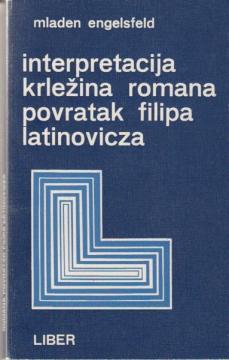
Interpretacija Krležina romana Povratak Filipa Latinovicza

Interpretacija Krležina romana Povratak Filipa Latinovicza

Mladen Engelsfeld

The author approaches the work through the prism of archetypal criticism and sees it as a work that explores deep existential themes through an introspective narrative and symbolic structure, making it one of the key novels of Croatian modernist literatur

Engelsfeld points out that Filip's process of individuation is shaped by his antithetical view of the world, where rational and emotional, conscious and unconscious, are opposed. Filip's introspective search for himself leads him through an analysis of his own traumas, memories, and relationship with his mother, which symbolizes a deeper existential crisis.

The novel also deals with the issue of identity and belonging, where Filip's return represents an attempt to reconcile with his own past and cultural heritage. Engelsfeld connects this motif with themes present in Krleža's short stories, such as "Devil's Island", which explore similar problems of identity and the meaning of life.

Engelsfeld's analysis also emphasizes the symbolic dimension of the novel, where characters and events are interpreted as archetypal patterns that reflect universal human dilemmas. Filip's artistic crisis and inability to create become a metaphor for the broader spiritual and cultural crisis of modern man.

Urednik
Vera Čičin-Šain
Naslovnica
Josip Vaništa
Dimenzije
20 x 13 cm
Broj strana
144
Nakladnik
Sveučilišna naklada Liber (SNL), Zagreb, 1975.
 
Latinica. Broširano.
Jezik: Hrvatski.

Jedan primjerak je u ponudi

Stanje:Korišteno, u vrlo dobrom stanju
Oštećenja / nepogodnosti:
  • Underlined in pencil
Dodano u košaricu!
 

Zanima Vas i neka druga knjiga? Možete pretražiti našu ponudu pomoću tražilice ili prelistati knjige po kategorijama.

Možda će Vas zanimati i ovi naslovi

Počeci romantizma (kritička studija o revolucionarnom periodu)

Počeci romantizma (kritička studija o revolucionarnom periodu)

Paul Lafargue

The book "The Beginnings of Romanticism" by Paul Lafargue deals with the analysis and history of the romantic movement in Europe.

Zora, 1950.
Hrvatski. Latinica. Broširano.
2,98
Povijest hrvatske književnosti 1-5

Povijest hrvatske književnosti 1-5

Maja Bošković-Stulli, Divna Zečević, Eduard Hercigonja, Marin Franičević, Franjo Švelec, Rafo Bog...

A classic work of Croatian literary historiography. The edition covers the periods from oral tradition to modernism, emphasizing the interference of oral and written literature, sociological context, aesthetic norms, and European connections.

Liber, 1978.
Hrvatski. Latinica. Tvrde korice.
Knjiga se sastoji od 5 tomova
37,26
Tumač ptičijeg leta ili izvođenje romana

Tumač ptičijeg leta ili izvođenje romana

Milica Nikolić

The interpreter of the bird's flight or the performance of the novel is an experimental and genre-hybrid text that plays with the boundaries between novels, essays and diary entries.

Narodna knjiga, 1998.
Srpski. Latinica. Broširano.
4,96
Uvod u književnost

Uvod u književnost

Zdenko Škreb, Ante Stamać
Grafički zavod Hrvatske (GZH), 1983.
Hrvatski. Latinica. Tvrde korice s ovitkom.
15,28
Skrivena teorija

Skrivena teorija

Pavao Pavličić

Pavle Pavličić's hidden theory was included among the ten best domestic nonfiction books in 2006 in the "Jutarnje lista" selection.

Matica hrvatska, 2006.
Hrvatski. Latinica. Tvrde korice s ovitkom.
11,98
Hrvatski fantastičari: Jedna književna generacija

Hrvatski fantastičari: Jedna književna generacija

Jurica Pavičić

This is one of the first synthetic analyses of the so-called Croatian fantasy generation (or "Borgesians", "young prose" with elements of fantasy) that appeared in the late 1960s and during the 1970s.

Zavod za znanost o književnosti Filozofskoga fakulteta, 2000.
Hrvatski. Latinica. Broširano.
9,72