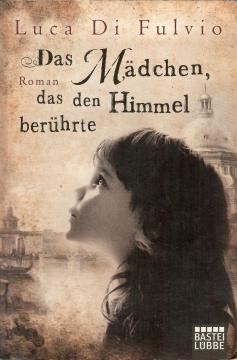
Das Mädchen, das den Himmel berührte

Das Mädchen, das den Himmel berührte

Luca Di Fulvio

In Renaissance Rome, a group of young thieves flee to Venice after a deadly confrontation with the Jew Simon. There, young Mercurio meets the Jewess Giuditta, and their love leads them through hatred and revenge.

The novel opens in historical Rome, at a time when hatred of Jews is growing among the impoverished masses. A group of teenagers, led by young Mercurio, who grew up on the streets and in a cave, survives by petty theft and fraud. One day, they rob a Jewish merchant named Simon Baruch, who brings in a year's income from his shop. The robbed Simon decides to take revenge; in the conflict, he kills a boy, but is himself seriously wounded and left speechless. Having abandoned his previous life, he sets off on an unstoppable pursuit of his attacker, leaving behind a trail of death and misfortune.

Stricken by loss, Mercurio and his group leave Rome and head for Venice, a city of hope and refuge, where they want to start a new life. At the same time, the Jewish woman Giuditta di Negroponte is traveling with her father Isaac. When their paths cross, Mercurio and Giuditta recognize each other as destined. But happiness is short-lived: circumstances separate them, the father opposes, and Simon's pursuit progresses inexorably.

Mercurio sets out in search of his lost love and will have to resist both family pride and religious fanaticism, while his former comrades turn into a threat. Over time, Mercurio matures from a street hustler into a freedom fighter, and Giuditta, without prospects, becomes an influential fashion designer. Through the labyrinth of Venetian streets and canals, between the splendor of St. Mark's and the misery of coastal taverns, Di Fulvio paints a Renaissance fresco about the power of love, hate, and redemption.

Titel des Originals
La ragazza che toccava il cielo
Übersetzung
Katharina Schmidt, Barbara Neeb
Maße
18,5 x 12,5 cm
Seitenzahl
972
Verlag
Bastei Lübbe, Köln, 2013.
 
Latein Schrift. Taschenbuch.
Sprache: Deutsch.

Angeboten wird ein Exemplar

Zustand:Gebraucht, in ausgezeichnetem Zustand
Zum Warenkorb hinzugefügt!
 

Interessieren Sie sich für ein anderes Buch? Sie können das Angebot über unsere Suchmaschine suchen und finden oder Bücher nach Kategorien durchsuchen.

Diese Titel könnten Sie auch interessieren

Čočara

Čočara

Alberto Moravia

Widow Cesira and her daughter Rosetta flee bombed Rome to their native Ciociaria, where they experience hunger, fear and misery. Liberation brings tragedy: Rosetta is raped by Moroccan soldiers, destroying their faith in God and people.

Otokar Keršovani, 1966.
Kroatisch. Latein Schrift. Hardcover.
3,96
Rimske priče: izbor

Rimske priče: izbor

Alberto Moravia

Collections of short stories from Roman life in the post-war era: ordinary people from the people and the petty bourgeoisie – the poor, workers, small craftsmen – face misery, survival, jealousy, petty deceit and moral compromises in everyday life.

Otokar Keršovani, 1966.
Kroatisch. Latein Schrift. Hardcover.
3,98
Drugi kraj konca

Drugi kraj konca

Andrea Camilleri

The Other End (2016) is part of the Inspector Salvo Montalbano series. Set in the fictional Sicilian town of Vigàtu, the novel combines criminal intrigue with the current topic of the migration crisis, with Camilleri's signature humor.

Profil Knjiga, 2017.
Kroatisch. Latein Schrift. Taschenbuch.
8,34
Sandokan

Sandokan

Emilio Salgari, Renato Caporali

A free prose adaptation by Renato Caporali based on the screenplay of the Italian mini-series Sandokan (1976, directed by Sergio Sollim, starring Kabir Bedi). It is based on the novel of the same name by Emilio Salgari (I pirati della Malesia, 1896).

Globus, 1977.
Kroatisch. Latein Schrift. Hardcover.
14,38
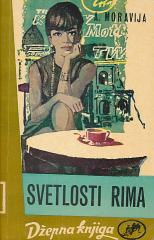
Svetlosti Rima

Svetlosti Rima

Alberto Moravia

Through these stories, Moravia explores themes of social inequality, the struggle for survival, and human frailty, portraying them with a mix of humor, irony, and realistic observation.

Svjetlost, 1965.
Serbisch. Latein Schrift. Taschenbuch.
3,82 - 3,92
Život je igra

Život je igra

Alberto Moravia

Knjiga se sastoji od nekoliko priča koje istražuju složenost ljudskog ponašanja, često kroz ironičan i satiričan prikaz svakodnevnog života.

Svjetlost, 1965.
Serbisch. Latein Schrift. Taschenbuch.
3,46 - 3,72