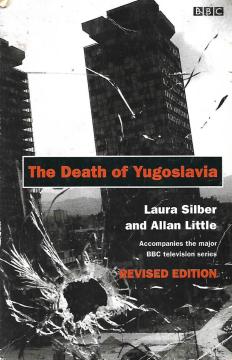
The Death of Yugoslavia
Im Angebot sind keine Exemplare vorhanden
Das letzte Exemplar wurde kürzlich verkauft.

Im Angebot sind keine Exemplare vorhanden
Das letzte Exemplar wurde kürzlich verkauft.
Interessieren Sie sich für ein anderes Buch? Sie können das Angebot über unsere Suchmaschine suchen und finden oder Bücher nach Kategorien durchsuchen.
In diesem Essayband analysiert Muharem Bazdulj, wie der Zusammenbruch Jugoslawiens und die Kriege der 1990er Jahre in der angelsächsischen Literatur widerhallten – von Vorkriegsstereotypen bis hin zu Kriegs- und Nachkriegsdarstellungen.
Sadik Salimovićs Buch „Srebrenica“ (2002) ist eine Erinnerung an die Stadt: von der osmanischen Besiedlung über die Islamisierung und Entwicklung bis hin zum Kriegsleid von 1992–1995 und dem Völkermord. Es bewahrt die Identität und die Erinnerung an das L
The author explores why Tito remains a popular symbol of stability, social security and independence, despite critical views of his regime. The book maps the cultural, political and everyday manifestations of "Titostalgia".
In the book, historian William Klinger investigates the origin and operation of OZNA - the brutal repressive apparatus of communist Yugoslavia, which monitored, imprisoned and liquidated political opponents.
The book depicts the development of a Bosnian bey family that, throughout the 19th and 20th centuries, transformed from a landowning family into a modern bourgeois family, reflecting broader social changes in Bosnia and Herzegovina.
Selected Works of Academician Ljubo Boban (2022) brings together key texts on contemporary Croatian history of the 20th century. The foreword by Damir Agičić highlights Boban's methodological rigor and objectivity in researching sensitive topics.