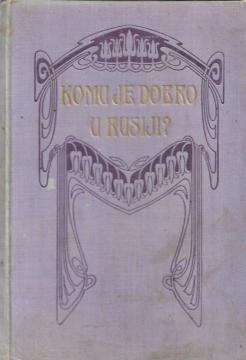
Komu je dobro u Rusiji?
Antiquität

Komu je dobro u Rusiji?
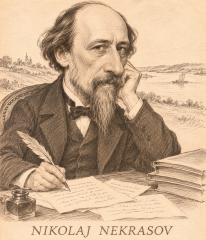
Nikolaj Aleksejevič Nekrasov
Nekrasov

Seven peasants travel across Russia to discover who truly lives well. Their search unfolds into a panorama of poverty, injustice and hope in Nikolay Nekrasov’s unfinished narrative poem.

Nikolay Nekrasov’s Who Can Be Happy and Free in Russia? is an epic poem about the search for happiness within a deeply unequal society. Seven peasants begin arguing over who enjoys a good life in Russia. Unable to agree, they set out to seek an answer among people from different social classes.

Their encounters reveal a country where the abolition of serfdom has left poverty and dependence firmly in place. Priests, landowners and peasants offer competing accounts of their lives, exposing dissatisfaction and insecurity beneath assumptions of privilege. Women’s experiences receive particular attention through accounts of exhausting labour, family pressures and loss.

Nekrasov combines storytelling with songs, folk expressions, satire and moving personal testimony. The journey becomes a broad portrait of Russian rural life, transforming a seemingly simple question about individual happiness into an examination of freedom and social justice.

Although unfinished, the poem develops a powerful tension between suffering and hope. Grisha Dobrosklonov suggests another understanding of fulfilment through commitment to the people and their future. Social criticism and the rhythms of oral tradition give this work its distinctive voice.

Titel des Originals
Кому на Руси жить хорошо
Übersetzung
August Harambašić
Maße
20 x 14 cm
Seitenzahl
160
Verlag
Matica hrvatska, Zagreb, 1905.
 
Latein Schrift. Hardcover.
Sprache: Kroatisch.

Angeboten wird ein Exemplar

Zustand:Gebraucht, in ausgezeichnetem Zustand
Nachteile/Unannehmlichkeiten:
  • Library stamp
Zum Warenkorb hinzugefügt!
 

Interessieren Sie sich für ein anderes Buch? Sie können das Angebot über unsere Suchmaschine suchen und finden oder Bücher nach Kategorien durchsuchen.

Diese Titel könnten Sie auch interessieren

Doživljaji kapetana Vrungela

Doživljaji kapetana Vrungela

Nekrasov
Nikolaj Aleksejevič Nekrasov
Mlado pokolenje, 1961.
Serbisch. Latein Schrift. Hardcover.
3,98 €
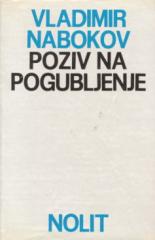
Poziv na pogubljenje

Poziv na pogubljenje

Vladimir Nabokov

There is no doubt that it is most attractive to read The Call to Execution as it appears to be written, as an anti-utopian or anti-totalitarian novel...

Nolit, 1988.
Serbisch. Latein Schrift. Fester Einband mit Schutzumschlag.
12,32 €
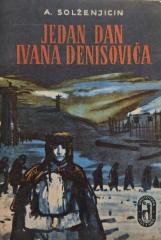
Jedan dan Ivana Denisoviča

Jedan dan Ivana Denisoviča

Aleksandar Solženjicin

The plot follows a day in the life of the title character; a prisoner sentenced to 10 years in a gulag somewhere in the Asian part of the Soviet Union in 1951.

Kultura, 1963.
Serbisch. Latein Schrift. Taschenbuch.
6,144,60 - 6,18 €
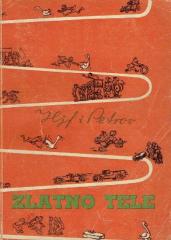
Zlatno tele

Zlatno tele

Iljf, Petrov
Ilja Iljf, Jevgenij Petrov

The Golden Calf (1931) is a brilliant satirical picaresque adventure, a sequel to the legendary 12 Chairs, where the great schemer Ostap Bender returns in full glory – charming, cynical, irredeemably cunning and always one step ahead of everyone else.

Kultura, 1946.
Kroatisch. Latein Schrift. Fester Einband mit Schutzumschlag.
7,56 €
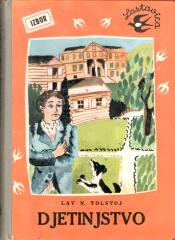
Djetinjstvo

Djetinjstvo

Tolstoj
Lav Nikolajevič Tolstoj

Djetinjstvo (1852.) prva je knjiga autobiografske trilogije (s Odrastanje i Mladost), gdje Tolstoj kroz oči desetogodišnjeg dječaka Nikolinke Irtenjeva istražuje svijet djetinjstva – nevinost, radosti, tuge i prve traume.

Svjetlost, 1971.
Kroatisch. Latein Schrift. Hardcover.
6,54 €
Sabrana djela A. P. Čehova #7: Seljaci i druge novele

Sabrana djela A. P. Čehova #7: Seljaci i druge novele

Čehov
Anton Pavlovič Čehov

U razmaku od godine 1892. kada je odštampan »Odlomak«, prva novela u ovoj knjizi, pa do »Seljaka« (1897) i »Na taljigama« (1897), A. P. Čehov je dao još niz umjetički vrlo uspjelih opservacija društva u kome je živio.

Zora, 1960.
Kroatisch. Latein Schrift. Fester Einband mit Schutzumschlag.
13,62 €