Komu je dobro u Rusiji?
Antikvitet

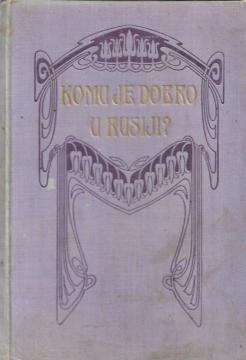
Komu je dobro u Rusiji?
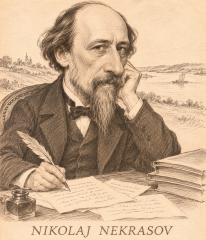
Nikolaj Aleksejevič Nekrasov
Nekrasov

Seven peasants travel across Russia to discover who truly lives well. Their search unfolds into a panorama of poverty, injustice and hope in Nikolay Nekrasov’s unfinished narrative poem.

Nikolay Nekrasov’s Who Can Be Happy and Free in Russia? is an epic poem about the search for happiness within a deeply unequal society. Seven peasants begin arguing over who enjoys a good life in Russia. Unable to agree, they set out to seek an answer among people from different social classes.

Their encounters reveal a country where the abolition of serfdom has left poverty and dependence firmly in place. Priests, landowners and peasants offer competing accounts of their lives, exposing dissatisfaction and insecurity beneath assumptions of privilege. Women’s experiences receive particular attention through accounts of exhausting labour, family pressures and loss.

Nekrasov combines storytelling with songs, folk expressions, satire and moving personal testimony. The journey becomes a broad portrait of Russian rural life, transforming a seemingly simple question about individual happiness into an examination of freedom and social justice.

Although unfinished, the poem develops a powerful tension between suffering and hope. Grisha Dobrosklonov suggests another understanding of fulfilment through commitment to the people and their future. Social criticism and the rhythms of oral tradition give this work its distinctive voice.

Naslov originala
Кому на Руси жить хорошо
Prevod
August Harambašić
Dimenzije
20 x 14 cm
Broj strana
160
Izdavač
Matica hrvatska, Zagreb, 1905.
 
Latinica. Tvrde korice.
Jezik: Hrvatski.

Jedan primerak je u ponudi

Stanje:Korišćeno, u odličnom stanju
Oštećenja / nepogodnosti:
  • Library stamp
Dodato u korpu!
 

Zanima Vas i neka druga knjiga? Možete pretražiti našu ponudu pomoću pretrage ili prelistati knjige po kategorijama.

Možda će Vas zanimati i ovi naslovi

Doživljaji kapetana Vrungela

Doživljaji kapetana Vrungela

Nekrasov
Nikolaj Aleksejevič Nekrasov
Mlado pokolenje, 1961.
Srpski. Latinica. Tvrde korice.
3,98 €
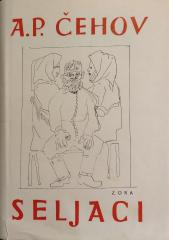
Sabrana djela A. P. Čehova #7: Seljaci i druge novele

Sabrana djela A. P. Čehova #7: Seljaci i druge novele

Čehov
Anton Pavlovič Čehov

U razmaku od godine 1892. kada je odštampan »Odlomak«, prva novela u ovoj knjizi, pa do »Seljaka« (1897) i »Na taljigama« (1897), A. P. Čehov je dao još niz umjetički vrlo uspjelih opservacija društva u kome je živio.

Zora, 1960.
Hrvatski. Latinica. Tvrde korice s omotom.
13,62 €
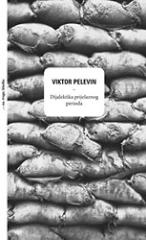
Dijalektika prijelaznog perioda

Dijalektika prijelaznog perioda

Viktor Pelevin

The book represents the author's anthology - the largest part is the novel Čisla (Čisla), followed by the short story Macedonian Criticism of French Thought and several short stories (Odin vog, Akiko, Fokus-grupa, Gost na prazniku bon).

Disput, 2006.
Hrvatski. Latinica. Broširano.
9,68 €
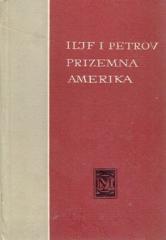
Prizemna Amerika

Prizemna Amerika

Iljf, Petrov
Ilja Iljf, Jevgenij Petrov

At the end of 1935, the famous Russian writing duo set off on a car trip across the United States, where they spent a total of three and a half months.

Grafički zavod Hrvatske (GZH), 1964.
Hrvatski. Latinica. Tvrde korice.
9,19 - 9,97 €
Zlatno tele

Zlatno tele

Iljf, Petrov
Ilja Iljf, Jevgenij Petrov

Das goldene Kalb (1931) ist ein brillantes satirisches Schelmenabenteuer, eine Fortsetzung des legendären Romans Die zwölf Stühle, in dem der große Intrigant Ostap Bender in voller Pracht zurückkehrt – charmant, zynisch, unverbesserlich gerissen und allen

Kultura, 1946.
Hrvatski. Latinica. Tvrde korice s omotom.
7,56 €
Zlatno telešce

Zlatno telešce

Iljf, Petrov
Ilja Iljf, Evgenij Petrov

Der Film „Das goldene Kalb“ (1931) erzählt die Geschichte des gerissenen Hochstaplers Ostap Bender, der im sowjetischen Russland während des ersten Fünfjahresplans einen geheimen Millionär sucht, um reich zu werden. Dabei stößt er auf die Absurdität der B

Naklada Binoza, 1934.
Hrvatski. Latinica. Tvrde korice s omotom.
9,74 €