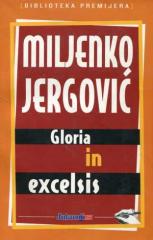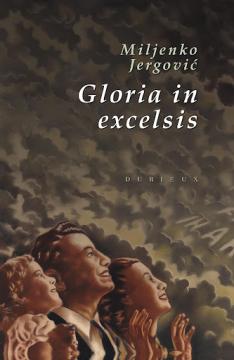
Gloria in excelsis

Gloria in excelsis

Miljenko Jergović

The novel intertwines three stories by three narrators, separated by centuries but connected by Bosnian destiny and memory. The complex structure uses chronicler style, orality, and fantasy, subverting the linear flow of time through interpolations and dr

First story: Kreševo ​​Chronicle (1765–1766). Friar Marijan Bogdanović, Franciscan chronicler of the monastery of St. Catherine in Kreševo, records the three-year reconstruction after a fire under Turkish rule. The language imitates Andrić's orality: seasons, traditions, superstitions (dreams of Šimun Paškvan, a supernatural oak tree). Characters like Ivan Gašparov Slavnić wander without memory; Friar Marijan struggles with rationality against the irrational, emphasizing the multiculturalism of Bosnia.

Second story: Zagreb Diary (1945). Željko Ćurlin, an RAF pilot of Yugoslav origin, spends four months in post-war Zagreb after the bombing of Sarajevo. Paranoia, shame before Koča Popović, encounters with Stepinac and agent Čajkanović dissolve illusions (the bomb on Sarajevo, his role in the crimes of the NDH). Episodes include Uncle Amidža Pepi and multiple versions of death; culminates in suicide, exploring the Titoist takeover and the relativization of evil.

Third story: Sarajevo Shelter (April 2, 1945). Šimun Paškvan, a retired accountant and bunker locksmith, narrates 80 minutes of panic during the Allied bombing. The language of the lower class: gamblers with unsolved crimes, Ustasha camp inmate Skorvatzy, Luburić as a figure of evil (discovery of hidden Jews). The key symbolizes the power of closing/opening; the bomb brings an apocalypse without salvation.

The stories are connected through the Paškvan family – metallurgical craft, mythical destiny, leaping centuries – and the motifs of the key, dream, fire. Themes: Bosnian melancholy, occupations (Turkish, Ustasha, Titoist), the transition of faith into conviction, coincidence versus logic, the disappearance of patience. The novel, as a mosaic-chronicle, announces death without messianic salvation, celebrating the "Gloria in excelsis" in the chaos of history.

Maße
20,5 x 13,5 cm
Seitenzahl
538
Verlag
Durieux, Zagreb, 2006.
 
Latein Schrift. Fester Einband mit Schutzumschlag.
Sprache: Kroatisch.
ISBN
978-9-53188-237-8

Angeboten wird ein Exemplar

Zustand:Gebraucht, in ausgezeichnetem Zustand
Reduzierter Preis: 13,269,95
Der Rabatt von 25 % gilt bis zum 25.02.2026 23:59 Uhr
Zum Warenkorb hinzugefügt!
 

Interessieren Sie sich für ein anderes Buch? Sie können das Angebot über unsere Suchmaschine suchen und finden oder Bücher nach Kategorien durchsuchen.

Diese Titel könnten Sie auch interessieren

Gloria in excelsis

Gloria in excelsis

Miljenko Jergović
Jutarnji list, 2005.
Kroatisch. Latein Schrift. Taschenbuch.
4,56 - 4,98
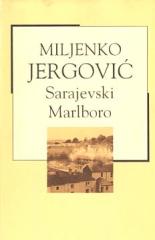
Sarajevski Marlboro

Sarajevski Marlboro

Miljenko Jergović

A collection of 29 short stories depicting the everyday life of the inhabitants of Sarajevo during the war. The author portrays the reality of war without pathos, focusing on small details that reflect human resilience and the complexity of life in extrem

Jutarnji list, 2004.
Kroatisch. Latein Schrift. Fester Einband mit Schutzumschlag.
4,88 - 5,20
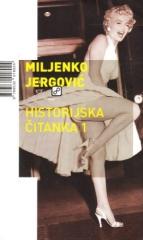
Historijska čitanka 1

Historijska čitanka 1

Miljenko Jergović

The cult book by Miljenko Jergović – a subjective history of a time, country and city... A historical reader is actually a family album because a person always becomes familiar with people in a time that has passed and which they want to explain.

V.B.Z, 2006.
Kroatisch. Latein Schrift. Taschenbuch.
6,22
Pan Volodijovski

Pan Volodijovski

Henryk Sienkiewicz
Otokar Keršovani, 1965.
Kroatisch. Latein Schrift. Fester Einband mit Schutzumschlag.
8,68
Voće tela

Voće tela

Milan Ranković

"Fruits of the Body" (1983) is a novel by Milan Ranković that explores physicality as a source of pleasure, suffering and social interaction in the context of Yugoslav socialism. The novel remains an under-read gem of Yugoslav prose in the 1980s.

August Cesarec, 1983.
Kroatisch. Latein Schrift. Fester Einband mit Schutzumschlag.
5,38 - 5,99
Pustila sam te

Pustila sam te

Clare Mackintosh

The tense psychological thriller "I Let You Go" by author Clare Mackintosh delivers an emotional plot with many unexpected twists that will change the dynamics of the story beyond recognition.

Mozaik knjiga, 2016.
Kroatisch. Latein Schrift. Taschenbuch.
6,84