Fenomenologija

Fenomenologija

Jean-Francois Lyotard

Lyotard's phenomenology focuses on the analysis of experience before conceptualization. For him, it is crucial to understand how an event, feeling, or stimulus appears in consciousness before language and social norms shape it into stable meanings.

Although Jean-François Lyotard is best known as a theorist of postmodernism, his philosophical beginnings are deeply connected to phenomenology. In his early works, he examines the fundamental question: how does experience give itself to consciousness at all? He starts from Husserl, but immediately emphasizes something that becomes recognizable for his later work — a distrust of stable structures and concepts.

Lyotard understands phenomenology as the study of what appears, but also of what escapes formulation. He is particularly interested in the affective — the raw feeling, the impulse, the intensity that has not yet been transformed into a concept. In this way, he moves phenomenology towards a philosophy of event: experience is neither fixed nor fully understandable, but constantly slips and slips. Speech and thought always lag behind immediate experience.

This orientation becomes the basis for his later concept of “difference” (différend) and the postmodern distrust of grand narratives. Phenomenology serves him as a method of revealing cracks in language — places where experience cannot be fully stated, where something remains unacknowledged or repressed. In this sense, Lyotard extends phenomenology towards a more radical understanding of subjectivity: the subject is not a stable bearer of experience, but is itself shaped by the constant impact of events that transcend it.

Lyotard's phenomenology is thus a bridge between the classical analysis of consciousness and his own postmodern thought, which emphasizes the fragmentation, discontinuity, and elusive nature of experience.

Titel des Originals
La phénoménologie
Übersetzung
Mirjana Zdravković
Editor
Milan Damnjanović
Titelseite
Ružica Stanisavljev-Vukašinović
Maße
20 x 14 cm
Seitenzahl
140
Verlag
BIGZ, Beograd, 1980.
 
Latein Schrift. Taschenbuch.
Sprache: Serbisch.

Angeboten wird ein Exemplar

Zustand:Gebraucht, in ausgezeichnetem Zustand
Zum Warenkorb hinzugefügt!
 

Interessieren Sie sich für ein anderes Buch? Sie können das Angebot über unsere Suchmaschine suchen und finden oder Bücher nach Kategorien durchsuchen.

Diese Titel könnten Sie auch interessieren

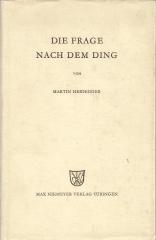
Die Frage nach dem Ding

Die Frage nach dem Ding

Martin Heidegger

The Question of Things, a collection of lectures given by Heidegger in 1935/36, deals with the fundamental philosophical question: What is a thing? His starting point is Kant's Critique of Pure Reason, but Heidegger goes further, wanting to clarify the ve

Max Niemeyer Verlag, 1975.
Deutsch. Latein Schrift. Fester Einband mit Schutzumschlag.
24,99
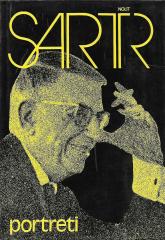
Portreti

Portreti

Jean-Paul Sartre
Nolit, 1981.
Kroatisch. Latein Schrift. Fester Einband mit Schutzumschlag.
8,74
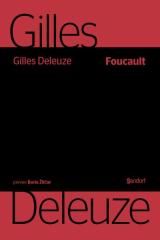
Foucault

Foucault

Gilles Deleuze

Deleuze's Portrait of Foucault (1986) is not a monograph, but a creative "thinking with Foucault." It analyzes the archaeology of knowledge, introducing the concepts of archive, power, subjectification, and "fold" as crucial to Foucault's thought on knowl

Sandorf, 2023.
Kroatisch. Latein Schrift. Taschenbuch.
11,86
Gotski križ

Gotski križ

Žarko Paić
Ceres, 1997.
Kroatisch. Latein Schrift. Taschenbuch.
6,24 - 6,99
Politički liberalizam

Politički liberalizam

John Rawls

John Rawls, the founder of modern liberalism, offers a roadmap for a stable society: "Political Liberalism," a sequel to the classic "A Theory of Justice," is not just a philosophical treatise, but a practical model for pluralistic societies like ours.

Kruzak, 2000.
Kroatisch. Latein Schrift. Taschenbuch.
32,56
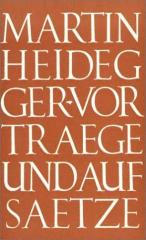
Vorträge und Aufsätze

Vorträge und Aufsätze

Martin Heidegger

Published in 1954, the collection brings together some of Heidegger's most important short texts from his middle and late period. In these texts, Heidegger develops key ideas about technology, art, language, and man's relationship to Being.

Pfullingen Neske Verlag, 1967.
Deutsch. Latein Schrift. Taschenbuch.
Das Buch besteht aus drei Bänden
49,99