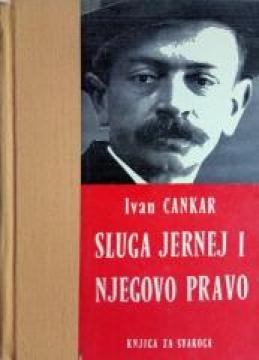
Sluga Jernej i njegovo pravo
Diese Geschichte symbolisiert den Kampf des kleinen Mannes um soziale Gerechtigkeit und Würde.
Die Geschichte folgt dem alten Diener Jernej, der sein ganzes Leben (vierzig Jahre) treu auf dem Gut des alten Sitarj gedient hat. Jernej ist der Ansicht, dass ihm seine Arbeit ein Recht auf ein eigenes Zuhause einräumt. Doch nach dem Tod des alten Herrn wirft ihn der junge Erbe vom Gut, da er ihn als nutzlose Last betrachtet. Jernej begibt sich auf die Suche nach seinem Recht und wendet sich an verschiedene Institutionen: die Kirche und den Bürgermeister, wo er auf Missverständnisse und Bürokratie stößt; das Gericht in Ljubljana, wo man ihm erklärt, dass das Gesetz Eigentum schützt, nicht die Arbeit eines Dieners; Wien (zum Kaiser): Schließlich geht Jernej sogar zum Kaiser, dem Symbol höchster Gerechtigkeit, findet aber auch dort keine Hilfe. Nachdem er erkennt, dass menschliche Gesetze den Armen keine Gerechtigkeit bieten, kehrt Jernej in sein Dorf zurück und zündet verzweifelt Sitarjs Gut an. Die Dorfbewohner werfen ihn daraufhin ins Feuer. Jernej symbolisiert den unterdrückten Arbeiter und die Arbeiterklasse. Er sucht keine Almosen, sondern die Anerkennung, dass er das Anwesen durch seine Arbeit mitgestaltet hat. Der junge Sitar verkörpert einen neuen, seelenlosen Kapitalismus, dem Tradition und menschliche Verdienste gleichgültig sind und der nur auf Profit und Eigentumstitel aus ist. Das zentrale Motiv, das Jernej moralisch versteht (das Recht auf die Früchte seiner Arbeit), wird vom System ausschließlich durch juristische Paragraphen und Eigentumsverhältnisse interpretiert. Das Werk kritisiert ein Gesellschaftssystem, in dem das Gesetz auf der Seite der Reichen steht, während der Arbeiter schutzlos ist. Cankar verdeutlicht anhand von Jernejs Tragödie die tiefe Kluft zwischen ethischer Gerechtigkeit und staatlichem Recht.
Weitere Exemplare sind verfügbar
Kopiennummer 1
Kopiennummer 2
- Spuren von Patina