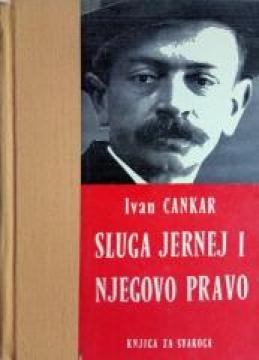
Sluga Jernej i njegovo pravo
This story symbolizes the little man's struggle for social justice and dignity.
The plot follows an old servant Jernej who has served faithfully on the estate of old Sitarj his entire life (forty years). Jernej believes that his work entitles him to a home, but after the old master's death, the young heir kicks him out of the estate because he considers him a useless burden. Jernej sets out in search of "his right" (right), visiting various institutions: The Church and the mayor: Where he encounters misunderstanding and bureaucracy. The court in the city (Ljubljana): Where they explain to him that the law protects property, not the work of a servant. Vienna (to the emperor): Jernej eventually goes even to the emperor, the symbol of the highest justice, but finds no help there either. After realizing that human laws do not know justice for the poor, Jernej returns to the village and in despair sets fire to Sitarj's estate, after which the villagers throw him into the fire. Jernej symbolizes the oppressed worker and the working class. He does not seek alms, but recognition that he co-created the estate with his work. Young Sitar represents a new, soulless capitalism that does not care about tradition or human merit, but only about profit and ownership papers. The central motif that Jernej understands morally (the right to the fruits of labor), while the system interprets it exclusively through legal paragraphs and ownership. The work criticizes a social system in which the law is on the side of the rich, while the worker has no protection. Cankar, through Jernej's tragedy, points to a deep gap between ethical justice and state law.
Multiple copies are available
Copy number 2
- Traces of patina