Izabrana djela 10: Mećava / Albert / Tri smrti / Otac Sergije / Gospodar i sluga / Kreutzerova sonata / Poslije plesa / Hadži-Murat
Leo N. Tolstoy, a master of literature, explores deep themes of human existence, morality, and society in his novels The Blizzard, Albert, Three Deaths, Father Sergius, The Master and the Servant, After the Dance, and Hadji Murad.
The Blizzard (1856): A traveler, inspired by Tolstoy himself, embarks on a carriage journey through a snowstorm. In a battle with the forces of nature, drivers and passengers face fear and mortality. The blizzard becomes a metaphor for the chaos of life, and the narrator, observing the courage and weaknesses of his fellow travelers, questions the meaning of existence. The work reflects Tolstoy's early interest in existentialism and nature.
Albert (1858): A young aristocrat meets Albert, a talented but poor musician prone to alcoholism. He tries to help him, but realizes that the social gap and Albert's self-destructiveness make salvation impossible. The story explores art, class differences, and the impossibility of forced change, reflecting Tolstoy's fascination with moral dilemmas.
Three Deaths (1859): Three stories about death – a nobleman, a coachman, and a tree – are woven together into a meditation on transience. The nobleman fears death, the coachman accepts it stoically, and the tree dies naturally. Tolstoy contrasts human attitudes toward death, emphasizing spiritual simplicity, which anticipates his later philosophical reflections.
Father Sergius (1898): Stepan Kasatsky, an ambitious officer, becomes a monk after a love disappointment. As Father Sergius, he struggles with pride, lust, and fame, falling into sin before finding peace in a simple life. This story reflects Tolstoy's late obsession with spiritual transformation and the rejection of worldly temptations.
Master and Servant (1895): Merchant Vasilij and servant Nikita embark on a journey during a blizzard. Vasilij, driven by greed, endangers both of them, but Nikita, in the spirit of Christian sacrifice, saves him at the cost of his own life. The story emphasizes Tolstoy's ideal of selflessness and criticism of materialism.
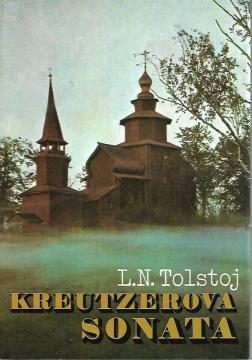
The Kreutzer Sonata (1889): Pozdnyakov, obsessed with jealousy, kills his wife, believing that marriage and passion are the root of evil. The story, inspired by a Beethoven sonata, has caused controversy for its radical views on sex and marriage, reflecting Tolstoy's late moral rigor.
After the dance (1903): Ivan Vasiljevič remembers the dance where he fell in love with a girl, but witnessing the brutal beating of her father, the colonel, shatters his illusions about love and society. This novella criticizes the hypocrisy of the military and the aristocracy, reflecting Tolstoy's pacifism.
Hadži-Murat (1904): Hadži-Murat, a Chechen rebel, struggles between loyalty to his people and a temporary alliance with the Russians. His tragic fate reveals the conflict between personal honor and political forces. Published posthumously, this novella is a masterpiece of Tolstoy's late style, combining epic narrative with moral depth.
These short stories show Tolstoy's development from early realism (The Blizzard, Albert) to profound moral and spiritual themes (Three Deaths, Father Sergius). The Kreutzer Sonata and After the Dance reflect his radical pacifism and criticism of society, while The Master and the Servant emphasize Christian ideals. Hadji Murad, a masterpiece of his late work, combines historical narrative with reflections on freedom. These stories, less well known than the novel, are key to understanding his philosophical evolution.
Early works such as The Blizzard and The Three Deaths were praised for their style, but the Kreutzer Sonata caused a scandal because of its criticism of marriage, and was even banned in Russia. Father Sergius and After the Dance criticized the church and the army, provoking controversy. Hadji Murad was hailed as a classic for its complexity and humanity. Today, these stories are regarded as gems of Tolstoy's genius.
Im Angebot sind keine Exemplare vorhanden
Das letzte Exemplar wurde kürzlich verkauft.