Antun Gustav Matoš
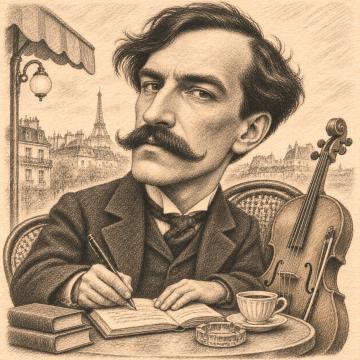
Antun Gustav Matoš (1873–1914) was a Croatian poet, short-story writer, travel writer and literary critic, and a leading figure in Croatian literary modernism. Born in Tovarnik, he grew up in Zagreb. After leaving his veterinary studies in Vienna, he was conscripted into the army. He deserted and moved to Belgrade, where he supported himself by playing the cello alongside his literary and journalistic work. He also lived in Geneva and Paris before returning to Zagreb in 1908, where he continued to write and take part in literary debates.
His short story Moć savjesti (1892) foreshadowed his interest in the troubled conscience and the boundary between reality and fantasy. During his lifetime he published three collections of stories, Iverje (1899), Novo iverje (1900) and Umorne priče (1909). Scenes of daily life in Zagreb and the Zagorje region alternate with grotesque and symbolic tales. In Cvijet sa raskršća, a meeting between a traveller and a blind girl becomes a story of longing and the fleeting nature of an encounter.
His poetry drew on the French Symbolists and Parnassians, especially Charles Baudelaire. He paid close attention to the rhythm and sound of verse, and the sonnet was one of his favourite forms. In Utjeha kose, Jesenje veče and Notturno, images of death, landscape and night shape the mood of each poem. In the travel sketches collected in Naši ljudi i krajevi (1910) and Vidici i putovi (1912), he links landscapes with their people and history, as well as with his own impressions of place. As a critic and columnist, he valued the individuality of a writer’s style, and his polemics were known for their wit and sharpness.
Naslovi u ponudi
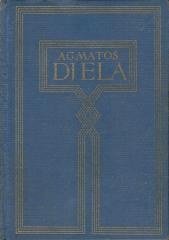
Djala 9: Pečalba - Kaprisi i feljtoni
Book of Works 9: Pečalba – Caprices and Feuilletons is a collection of caprices, feuilletons and satirical writings with sharp criticism of society, irony, humor and Matoš's bohemian, polemical spirit.
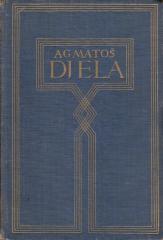
Djela 1: Iverje / Novo iverje
The first volume of the first critical edition of Matoš's collected works brings together early collections of sketches and short stories, Iverje (1899) and Novo iverje (1900) - humorous, satirical and fantastic stories with autobiographical motifs.

Djela 3: Umorne priče
Treći svezak Barčevog kritičkog izdanja Djela A. G. Matoša (1935.–1940.) sadrži zbirku Umorne priče (1909.), zrele novele i crtice s temama umora, ljubavi, smrti, satire i modernog života.
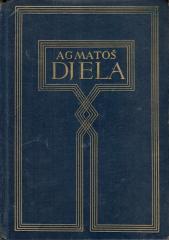
Djela 5: Pjesme i epigrami
Peti svezak Barčevog izdanja Matoševih sabranih djela sadrži njegovu liriku i epigrame, simbolističko-romantične stihove s temama ljubavi, smrti, domovine, melankolije i ironije, većinom objavljene posmrtno.
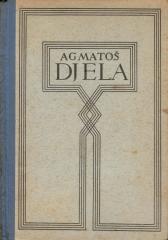
Djela 6: Dojmovi
Šesti tom u kritičkom izdanju od 17 tomova „Dela A. G. Matoša“ je zbirka književnih, kulturnih i putopisnih utisaka, kritika i feljtona sa oštrim zapažanjima, ironijom i evropskim horizontima.
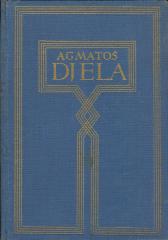
Djela 7: Ličnosti, problemi i pejzaži
A collection of essays, portraits of personalities, social problems and landscape impressions with sharp criticism, cultural analyses and Matoš's characteristic polemical and lyrical style.
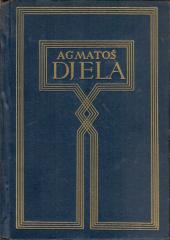
Djela 8: Oko Zagreba i po Hrvatskoj
The eighth volume of Matoš's Works, edited by Julije Benešić, is a collection of feuilletons, travelogues and impressions of Zagreb, its surroundings and Croatian regions, full of lyrical landscapes, social criticism and polemical observations.
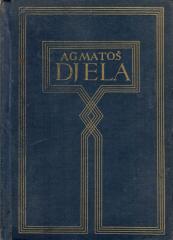
Djela X: Dragi naši savremenici: Polemike, epigrami i satire
The tenth volume of Matoš's works brings together polemics, epigrams, and satires in which the author sharply comments on his contemporaries, society, literature, and politics, confirming his sharp critical style.
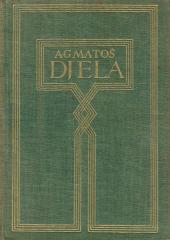
Djela XIII: Theatralia: Scenski pokušaji, članci o kazalištu i koncertima, dio prvi (1897.–1909.)
The thirteenth volume of the first edition of Matoš's collected works brings together dramatic attempts and theater and concert criticism from the period 1897–1909, revealing Matoš as an insightful theater critic.

Djela XI: Priče i impresije
The eleventh volume of the first edition of Matoš's collected works brings together stories and impressions that vividly illustrate the author's lyrical prose, psychological insight, and impressive descriptions of people, landscapes, and cities.