Josip Broz-Tito
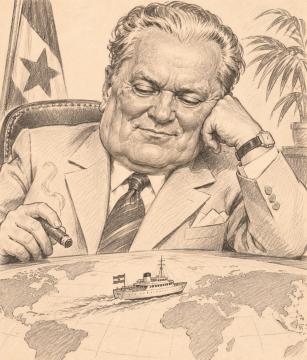
When Yugoslavia broke with Stalin in 1948, Josip Broz Tito (1892–1980) led a country that had to make room for an independent foreign policy. Thirteen years later, Belgrade welcomed leaders of countries that also wanted the freedom to make their own decisions outside the Cold War blocs. The 1961 conference marked the beginning of the Non-Aligned Movement, in which Tito played a leading role.
Born in Kumrovec to a Croatian father and a Slovenian mother, Tito trained as a metalworker. He served in the Austro-Hungarian army during the First World War and was taken prisoner by Russian forces. After returning, he joined the Communist Party of Yugoslavia and took over its leadership in the late 1930s. From 1941 he led the Partisan resistance, out of which the postwar Yugoslav federation emerged. He became president of the republic in 1953 and was elected president for life in 1974. He died in Ljubljana.
After the break with Stalin, Yugoslavia introduced workers’ self-management. The 1974 constitution expanded the powers of the republics and autonomous provinces. The League of Communists retained its monopoly on political power. After the break with the Soviet Union, the authorities persecuted actual and alleged Cominform supporters. In 1971 Tito backed the suppression of the Croatian Spring. Those decisions form part of the same political career as the international standing he gained through non-alignment.
The principal source for Tito’s writings is the multivolume Sabrana djela (Collected Works), whose first volume appeared in 1977. It brings together speeches, articles, letters and other documents. The first volume alone, covering May 1926 to August 1928, goes back to his work in trade unions and the party. The historian Vladimir Dedijer wrote extensively about Tito in Novi prilozi za biografiju Josipa Broza Tita. Tito’s texts show how he publicly explained his decisions, while Dedijer’s work gives a wider context for the people and events he discussed.
Titles in our offer
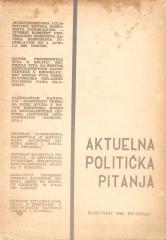
Aktuelna politička pitanja 1962.
Current Political Issues records the moment when the top of the Communist Party of Yugoslavia in 1962 publicly acknowledged the difficulties of reform: in Tito's speech in Split and Ranković's contributions, one sees the crisis, discipline, and struggle o
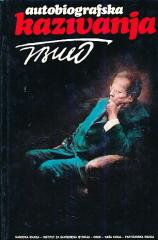
Autobiografska kazivanja I-II
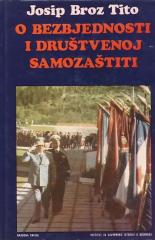
O bezbjednosti i društvenoj samozaštiti
The collection of speeches and texts by Josip Broz Tito, "On Security and Social Self-Protection," elaborates on the concept of all-people's defense, internal security, and the protection of the achievements of the socialist self-management order.