Goran Tribuson

Goran Tribuson (born in Bjelovar in 1948) follows a group of friends born in the same year as himself in Povijest pornografije (1988). They grow up with crime novels, rock music and jeans. What seemed all-important in their youth comes back to them later with affection and a little embarrassment. Through their friendships, loves and disappointments, Tribuson portrays what it was like to grow up in socialist Yugoslavia. His other novels about his generation include Polagana predaja (1984) and Legija stranaca (1985).
He graduated in Yugoslav studies and comparative literature in Zagreb. He worked in marketing and publishing, then taught at Zagreb’s Academy of Dramatic Art from 2000 until his retirement in 2013. He became a full member of the Croatian Academy of Sciences and Arts in 2008. He began publishing short stories in the early 1970s as part of a generation of Croatian fantasy writers. In Zavjera kartografa (1972), Praška smrt (1975) and Raj za pse (1978), Central European cities, legends and occult traditions give everyday scenes an unexpected turn.
Zavirivanje (1985) introduces Nikola Banić, a Zagreb investigator modelled on Raymond Chandler’s Philip Marlowe. From Siva zona (1989) and Noćna smjena (1996) to Susjed u nevolji (2014), his cases bring him among people whose connections, money and reputation determine what they can afford and what they can cover up. The investigation becomes a way of showing how the city really works after hours.
Tribuson also wrote for film and television. He worked with his sister, director Snježana Tribuson, on Ne dao Bog većeg zla (2002), for which he won a Golden Arena for the screenplay. His novel of the same name appeared that year. They also collaborated on the television comedy Odmori se, zaslužio si (2006–2013).
He collected his writings about growing up in Obiteljske slike (2022) and turned to a love story in Truba Cheta Bakera (2024). He received the Vladimir Nazor Lifetime Achievement Award for 2024.
Titles in our offer

Angel Toth, nogometni prorok ili životopis u šest redaka
A short novel by one of the most widely read contemporary Croatian prose writers brings a humorous and nostalgic story about a small man and great passions, told in a recognizable, warm and ironic tone.


Kad čujem Daruvar
The collection "When I Hear Daruvar", edited by Kruno Lokotar, brings together 28 stories, essays and travelogues by renowned authors on the topic of Daruvar - a unique literary portrait of the city.
Klub obožavatelja
Goran Tribuson’s 2001 nostalgic autobiographical novel describes—with wit and a touch of melancholy—growing up in Bjelovar, a passion for rock music and films, and the first loves of a single generation.
Kuća u kojoj stanuje vrag
In The House Where the Devil Dwells, Tribuson also thematizes the time of new poverty, crazy jokes on the way to earning money, usury, jealousy, revenge, strikes, and murders.
Landranja
Goran Tribuson's Landranja is an anti-walking and anti-walking story. Their hero has everything he needs indoors: books, movies and music.

Made in U.S.A.
Imagine Zagreb in the 1980s, where behind the gray facades of apartment buildings lies a dream world of the far West – Hollywood, freedom and endless possibilities. Tribuson, a master of Croatian prose, here combines genres into one fluid story that bites
Povijest pornografije
At the age of forty, Goran Tribuson published a book that will permanently win over the readership. The novel "History of Pornography" and the year 1988 will be on every list of anthology readings and important years for contemporary Croatian prose.
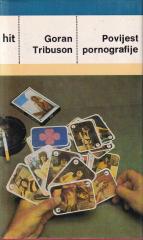
Povijest pornografije
At the age of forty, Goran Tribuson published a book that will permanently win over the readership. The novel "History of Pornography" and the year 1988 will be on every list of anthology readings and important years for contemporary Croatian prose.

Rani dani - Kako smo odrastali uz filmove i televiziju
In his autobiographical prose, Early Days (1997), Goran Tribuson evokes childhood and early adulthood in Bjelovar through the prism of film and television. An extraordinarily humorous story about ordinary life in the 1960s.