Thomas Mann
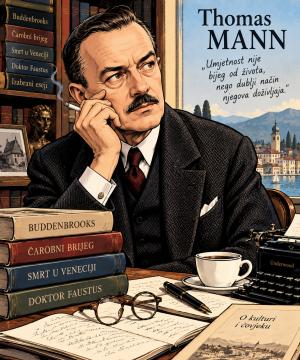
Thomas Mann, a German writer, essayist, and one of the most significant figures in 20th-century European literature, was born on June 6, 1875, in Lübeck and died on August 12, 1955, in Zurich. He was awarded the Nobel Prize in Literature in 1929, primarily thanks to the novel Buddenbrooks, which brought him international acclaim.
He grew up in a prominent merchant family, and after his father's death, he moved to Munich, where he began his literary career. His first major novel, Buddenbrooks (1901), depicts the decline of a bourgeois family over several generations, exploring the conflict between artistic sensibility, social expectations, and bourgeois values.
This was followed by the novellas Tonio Kröger (1903) and Death in Venice (1912), in which he addresses the relationship between art and life, beauty, passion, and moral responsibility. The novel The Magic Mountain (1924) presents a multi-layered philosophical portrait of European society on the eve of World War I, examining themes of time, illness, death, and ideological conflicts.
In the tetralogy Joseph and His Brothers (1933–1943), he reinterprets the biblical narrative through mythological and psychological perspectives. The novel Lotte in Weimar (1939) is dedicated to Goethe’s life and work, while Doctor Faustus (1947) links the artist's fate to Germany's spiritual and political catastrophe. Among his later works, Confessions of Felix Krull (1954) stands out.
After the Nazis came to power in 1933, Mann left Germany and lived in Switzerland and the United States, where he publicly spoke out against Nazism. He returned to Switzerland in 1952.
His body of work is characterized by psychological depth, irony, philosophical reflection, and critical examination of European culture. Mann’s works remain an enduring testament to the relationship between the individual, art, history, and social responsibility.
Titles in our offer
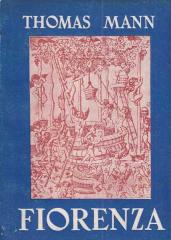
Fiorenza
Thomas Mann’s *Fiorenza* is a historical drama set in Renaissance Florence that depicts the conflict between the preacher Girolamo Savonarola and Lorenzo de’ Medici, exploring the relationship between art, faith, and power.
Josip i njegova braća III: Josip u Egiptu
The third part of the tetralogy by German Nobel Prize winner Thomas Mann, Joseph and His Brothers, is entitled Joseph in Egypt. This tetralogy is considered one of the most important works by Thomas Mann, as well as by German literature of the twentieth c
Josip i njegova braća II: Mladi Josip
The second part of the tetralogy by German Nobel Prize winner Thomas Mann, Joseph and His Brothers, is entitled Young Joseph. This tetralogy is considered one of the most important works by Thomas Mann, as well as by German literature of the twentieth cen
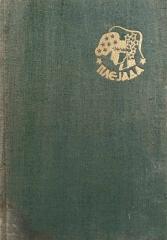
Legende
Thomas Mann's *Legends* is a collection of three prose works inspired by myth, religion, and folklore. Through stories of love, identity, laws, and temptations, the author explores the contradictions of human nature.
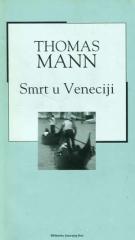
Smrt u Veneciji
Thomas Mann's novella *Death in Venice* follows the writer Gustav von Aschenbach, whose obsession with the beauty of the young Tadzio during his stay in Venice leads to an inner breakdown and a tragic fate.
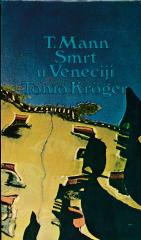
Smrt u Veneciji / Tonio Kröger
Death in Venice (1912) and Tonio Kröger (1903) by Thomas Mann are two novellas that explore the themes of art, passion, and the inner conflicts of the individual in the modern world.