Umberto Eco
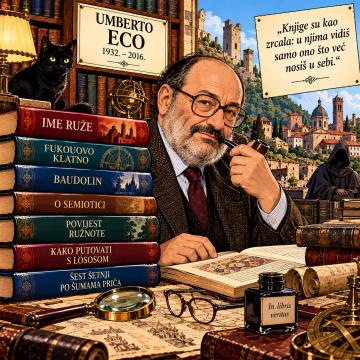
Umberto Eco (1932–2016), an Italian writer, philosopher, semiotician, essayist, and university professor, was born on January 5, 1932, in Alessandria and died on February 19, 2016, in Milan. He was one of the most influential European intellectuals of the second half of the 20th century, known for bridging literature, philosophy, history, semiotics, and communication theory.
He studied medieval philosophy and literature at the University of Turin, where he earned his doctorate with a thesis on the aesthetics of Thomas Aquinas. He worked for the Italian broadcaster RAI and in the publishing industry, and from 1975 onwards, he taught semiotics at the University of Bologna.
He began his scholarly career with the work The Aesthetic Problem in Thomas Aquinas (1956). In the book The Open Work (1962), he explores the ambiguity of art and the active role of the reader. Notable among his theoretical works are The Absent Structure (1968), A Theory of Semiotics (1975), Lector in Fabula (1979), and The Limits of Interpretation (1990).
He achieved worldwide literary fame with the novel The Name of the Rose (1980), a historical mystery set in a medieval monastery. The novel combines a detective mystery, theological debates, the philosophy of language, and the question of freedom of thought.
This was followed by the novels Foucault's Pendulum (1988)—dealing with an obsession with secret societies and conspiracy theories—and The Island of the Day Before (1994), which explores time, space, and human perception. In the novels Baudolino (2000) and The Mysterious Flame of Queen Loana (2004), he addresses history, storytelling, memory, and identity.
His final novels, The Prague Cemetery (2010) and Numero Zero (2015), expose the mechanisms of political manipulation, propaganda, and the fabrication of fake news.
Eco also published numerous essays, most notably How to Travel with a Salmon, History of Beauty (2004), On Ugliness (2007), and Six Walks in the Fictional Woods (1994).
His body of work is characterized by erudition, irony, intertextuality, postmodernism, and an exploration of the relationship between signs and reality. Umberto Eco left an enduring mark on contemporary literature, aesthetics, and cultural theory, demonstrating how reading and interpretation shape our understanding of the world.
Titles in our offer
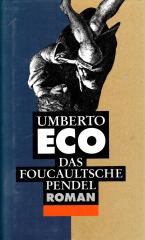
Das Foucaultsche Pendel
Three bored Milanese editors invent a gigantic conspiracy "Plan" linked to the Templars and occult societies. The game becomes a deadly reality.
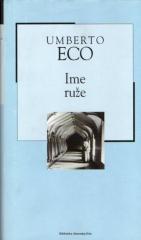
Ime ruže
Eco's philosophical-religious-criminological novel The Name of the Rose was immediately recognized as an exceptional work, so it became - and remains - a book that is read and talked about all over the world.
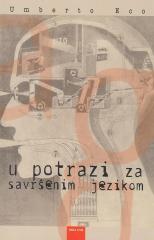
U potrazi za savršenim jezikom
Umberto Eco explores the centuries-long quest for a perfect, universal language that would transcend linguistic differences. He traces the philosophical, religious, and scientific attempts to create a language common to all humanity.