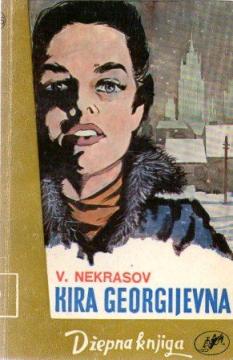
Kira Georgijevna

Kira Georgijevna

Viktor Nekrasov

The novella was published for the first time in 1961 in the magazine Novij mir and aroused anger among critics, pointing out that it is only "about the narrow, intimate experiences of the heroine".

In the central female character of Kira, Nekrasov created an independent, carefree, goal-oriented woman, and at the expense of the then desirable "collective and social" tone, he prioritized an individual human story. The final note about the author was written by Josef Kadlec.

Translation
Petar Vujičić
Editor
Risto Trifković
Graphics design
Mirko Stojnić
Dimensions
17 x 11 cm
Pages
137
Publisher
Svjetlost, Sarajevo, 1963.
 
Latin alphabet. Paperback.
Language: Croatian.

One copy is available

Condition:Used, excellent condition
Damages or inconvenience notice:
  • Traces of patina
 

Are you interested in another book? You can search the offer using our search engine or browse books by category.

You may also be interested in these titles

Aurorin poticaj

Aurorin poticaj

Erich Hackl

The work is based on a true event that occurred in Spain in 1933: Aurora Rodriguez killed her daughter Hildegart, a famous fighter for women's emancipation and a cult figure on the political scene of the time.

Mladost, 1990.
Croatian. Latin alphabet. Hardcover with dust jacket.
4.96 - 4.98
Deobe 1-3

Deobe 1-3

Dobrica Ćosić

This work, awarded the NIN Prize for that year, is considered one of the most significant in Serbian literature after World War II.

Prosveta, 1961.
Serbian. Cyrillic alphabet. Hardcover with dust jacket.
The book consists of 3 volumes
11.42
Neprijatelji / ljubavna priča

Neprijatelji / ljubavna priča

Isaac Bashevis Singer

Enemies: A Love Story, perhaps Singer's best-known novel, takes place in New York in the 1950s.

Svjetlost, 1986.
Croatian. Latin alphabet. Hardcover with dust jacket.
5.98
Đavoli dolaze

Đavoli dolaze

Miodrag Bulatović
Rad, 1986.
Serbian. Latin alphabet. Paperback.
1.16
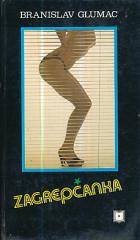
Zagrepčanka

Zagrepčanka

Branislav Glumac

Branislav Glumac published a novel without periods or commas in 1974, as the relentless stream of thought of a young rebel. Published in socialist Yugoslavia, the work caused a scandal with its openness and became a classic about generational rebellion.

IROS, 1986.
Croatian. Latin alphabet. Hardcover.
8.22 - 8.24
Deobe

Deobe

Dobrica Ćosić

Deobe is a novel about the tragic division of Serbs into Chetniks and Partisans during World War II. Winner of the NIN Award, it is part of a wider epic trilogy, inspired by Ćosić's experiences and historical documents.

Prosveta, 1963.
Croatian. Latin alphabet. Hardcover with dust jacket.
13.74