
Nana

Nana

Émile Zola

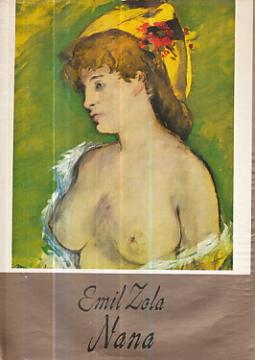
The novel "Nana" by Emil Zola is a story about false love, about feigned passion and lust, greed and all emotions related to possessing material things. Everything is embodied in the figure of a woman, possessed of all the vices that society condemns.

In the character of Nana, the power and weight of money, as well as the position that can be bought, are faithfully depicted. The material things that Nana is obsessed with elevate her into a society she does not belong to, which is the realization of her raw soul.

Nana exudes sensuality, power over the opposite sex, an attraction that she uses abundantly to achieve her goal, wealth and glamour, regardless of the price. Nana is a devourer of men, regardless of their age. The weight of their money is important. Human moral qualities lose their significance when they come into contact with Nana. She uses them all to satisfy her personal ego, as long as she can afford it financially.

Translation
Ivan Dimitrijević, Milan Šare
Editor
Milivoje Marković
Graphics design
Hašim Kablarević
Dimensions
20 x 14.5 cm
Pages
428
Publisher
Minerva, Subotica, 1984.
 
Distribution: 10,000 copies
 
Latin alphabet. Hardcover with dust jacket.
Language: Serbian.

One copy is available

Condition:Used, excellent condition
Damages or inconvenience notice:
  • Traces of patina
 

Are you interested in another book? You can search the offer using our search engine or browse books by category.

You may also be interested in these titles

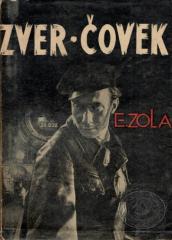
Zver-čovek

Zver-čovek

Émile Zola

The novel explores the destructive forces of inheritance, passion, and violence in modern industrial society. The action takes place largely on the railroad, a symbol of speed, destiny, and inevitable doom. “Beast Man” is the first description of crime in

Nolit, 1940.
Serbian. Latin alphabet. Paperback with dust jacket.
56.32
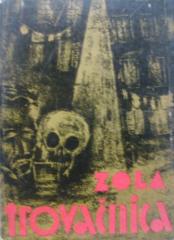
Trovačnica

Trovačnica

Émile Zola

The novel The Poisoner was published in sequels during 1876, and in book form in 1877. It is the story of a woman's struggle for happiness in the working class of Paris.

Rad, 1955.
Serbian. Latin alphabet. Hardcover with dust jacket.
8.62 - 9.99
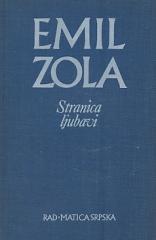
Stranica ljubavi

Stranica ljubavi

Émile Zola
Rad, 1974.
Serbian. Latin alphabet. Hardcover.
5.84
Tri mušketira 1-2

Tri mušketira 1-2

Alexandre Dumas

Dumas' version of the story depicts the adventures of d'Artagnan and his friends from 1625 to 1628.

Epoha, 1966.
Croatian. Latin alphabet. Hardcover with dust jacket.
The book consists of two volumes
9.48
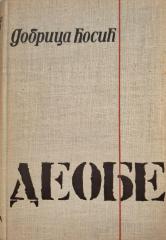
Deobe 1-3

Deobe 1-3

Dobrica Ćosić

This work, awarded the NIN Prize for that year, is considered one of the most significant in Serbian literature after World War II.

Prosveta, 1961.
Serbian. Cyrillic alphabet. Hardcover with dust jacket.
The book consists of 3 volumes
11.42
Usta puna zemlje

Usta puna zemlje

Branimir Šćepanović

The novel "Usta puna zemlje" (1970), the masterpiece of the Serbian writer Branimir Šćepanović, is a psychologically in-depth explorer of the limits of the human soul, solitude and existential freedom, reminiscent of Kafka and Camus.

BIGZ, 1987.
Serbian. Latin alphabet. Paperback.
3.96 - 3.98