Émile Zola
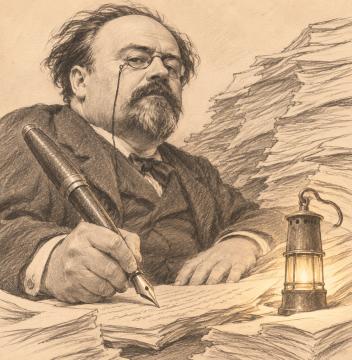
Étienne Lantier arrives in a mining district in northern France looking for work. Once he goes down the shaft, he discovers how hard entire families have to labour to survive. In Germinal (1885), Émile Zola follows the miners’ discontent as it turns into a strike and asks what happens when lost wages mean their children may go hungry.
Zola (Paris, 1840–1902) spent his childhood in Aix-en-Provence, where he befriended the painter Paul Cézanne. In Paris he worked for the publisher Hachette before devoting himself to writing and journalism. Thérèse Raquin (1867), a novel of adultery, murder and guilt, already showed his interest in how people behave under pressure from their own impulses and circumstances.
He developed that idea across the twenty novels of Les Rougon-Macquart (1871–1893). Following different branches of one family, he took readers through working-class districts, theatres, department stores and financial circles under France’s Second Empire. In L’Assommoir (1877), the laundress Gervaise struggles to keep her business and family together. In Nana (1880), her daughter enters the world of the theatre and its wealthy patrons.
In The Experimental Novel (Le Roman expérimental, 1880), Zola set out his understanding of naturalism. The writer observes people in specific circumstances and examines how heredity and environment shape their decisions. The importance of detail is evident in The Ladies’ Paradise (Au Bonheur des Dames, 1883). The displays, discounts and layout of a department store change customers’ habits and threaten smaller businesses in the neighbourhood.
In 1898 Zola published the open letter “J’accuse…!” in L’Aurore, publicly challenging the wrongful conviction of the army officer Alfred Dreyfus. Convicted of libel, he took refuge in England and returned to France in 1899. His novels had long explored how institutions determine individual lives. In the Dreyfus affair, he put that question to the readers of a daily newspaper.
Titles in our offer
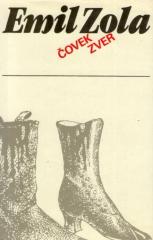
Čovek zver
The main character, Etienne Rouen, represents the archetypal figure of a modern man whose character is marked by inner brutality.
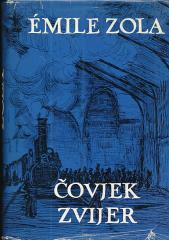
Čovjek zvijer
The novel explores the destructive forces of inheritance, passion, and violence in modern industrial society. The action takes place largely on the railroad, a symbol of speed, destiny, and inevitable doom. “Beast Man” is the first description of crime in

Germinal
Ein Roman, der den Höhepunkt des literarischen Schaffens eines der bedeutendsten Vertreter des Naturalismus in der Literatur darstellt.
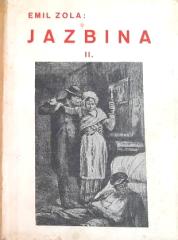
Jazbina II.
Émile Zolas naturalistischer Roman *Der Totschläger* (*L’Assommoir*) schildert den tragischen Niedergang der Pariser Wäscherin Gervaise Macquart und legt dabei die verheerenden Auswirkungen von Armut, Alkoholismus und harten sozialen Lebensbedingungen auf
Kaljuga
Nach dem Sturz des Zweiten Kaiserreichs setzt sich der moralische Niedergang der Familie Rougon-Macquart fort. Der Roman schildert den gesellschaftlichen Sumpf, die Korruption, die Heuchelei und die Finanzspekulationen im Paris des späten 19. Jahrhunderts
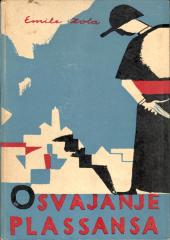
Osvajanje Plassansa
Die Ankunft des ehrgeizigen Priesters Faujas in Plassans entfacht einen Kampf um politische und gesellschaftliche Vorherrschaft, geprägt von religiöser Manipulation, Familientragödie und Machtstreben.
Slom
„Breakdown“ ist eine kraftvolle und emotionale Darstellung der Kriegsereignisse, aber gleichzeitig auch eine tiefe Reflexion über das menschliche Schicksal und die kollektive Erfahrung.

Stranica ljubavi
Der Roman „Die Seite der Liebe“ von Émil Zola erzählt das Leben einer jungen Witwe und eines Arztes, die durch die Krankheit der zwölfjährigen Tochter der Witwe zusammengeführt werden.