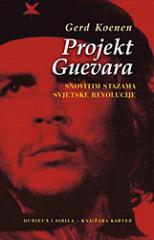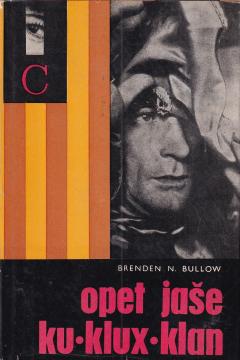
The book is written in a lively and sharp style, which - along with a vivid film of facts - continuously keeps the attention of the reader who likes nonfiction full of twists and a certain cynicism imposed by the topic.
The book provides a detailed account of naval conflicts in the Atlantic Ocean during World War II, with particular emphasis on the Battle of the Atlantic Convoy and the activities of German submarines – the so-called "invisible enemy".
Znanje, 1985.
Croatian. Latin alphabet. Hardcover with dust jacket.
The book consists of two volumes
6.98 €
History of Europe • Military history • 20th Century
The crime against the Armenians is only coming to light today. After almost a century, the tragedy of a nation, the indifference of the Constantinople authorities, the media cover-up and the turning of the international community's head are unfolding befo
Durieux, 2010.
Croatian. Latin alphabet. Hardcover with dust jacket.
11.42 €
Croatian history • Yugoslavia • Serbian History • 20th Century • Political journalism
The author presents the political and ideological legacy of King Aleksandar I Karađorđević the Unifier. The book, published immediately after the king's death, is an attempt to preserve and transmit his political ideals to future generations.
Jugoslovenska biblioteka "Bratstvo", 1936.
Serbian. Cyrillic alphabet. Hardcover.
28.36 €
Education • Pedagogy • Sociology • Croatian history • 20th Century • Collections and chronologies
The collection "Education in the 20th Century", published in 2003 in Annals for the History of Education (vol. 2), contains papers from the professional-scientific meeting in Zagreb (October 25-27, 2001), held on the occasion of the 100th anniversary of t
Hrvatski školski muzej, 2003.
Croatian. Latin alphabet. Paperback.
5.98 €
Czech literature • History of Europe • Central European history • 20th Century • Political journalism • Political-historical essays
In this edition, translated by dr. Aleksandar Ilić, there are texts of the first Czechoslovak president in which he timely criticizes Marx, Engels and Lenin, and actually goes on to criticize imperialism in general.