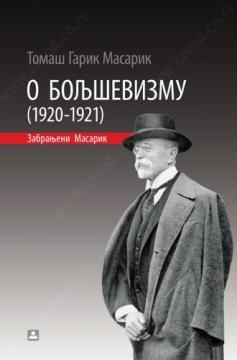
O boljševizmu (1920-1921) - zabranjeni Masarik

O boljševizmu (1920-1921) - zabranjeni Masarik

Tomáš G. Masaryk

In this edition, translated by dr. Aleksandar Ilić, there are texts of the first Czechoslovak president in which he timely criticizes Marx, Engels and Lenin, and actually goes on to criticize imperialism in general.

Tomas Masaryk (1850-1937) was the first president of the Czechoslovak Republic, but in addition to his political and statesmanship successes, he also achieved notable results as a philosopher and political theorist. As a philosopher, he was a rationalist and humanist, religious, but also anticlerical, an opponent of conservatism, Marxism, communism and the Soviet Union. In real politics, he was a supporter of Anglo-Saxon democracy, quiet and hard work and passive political resistance. During the annexation crisis of 1909, the "father of Czechoslovakia" defended the rights of Serbs and Croats, and it was largely due to his merit that Emperor Franz Joseph was forced to pardon and release Serbs accused of treason against the Habsburg Monarchy, in a staged Zagreb trial, during which serious accusations were also made against the Kingdom of Serbia.

Masaryk's theoretical outlook and practical political experience led him to the conclusion that the democratic nation-state is the most familiar form of social organization and a relatively reliable means both for the development of democracy in the country and for the defense of identity and independence, especially of small nations. In previous decades, our public, for obvious reasons, knew little about the political ideas and activities of Tomasz Masaryk, especially about his criticism of left-wing totalitarianism. They arose in significantly different circumstances than today, which seemed to be overlooked by Aleksandr Solzhenitsyn, also one of the most significant fighters against Stalinism, who said towards the end of his life: I thought we were fighting Stalinism, but it seems that we are fighting Russia.

Original title
O bolševictvi
Translation
Aleksandar Ilić
Editor
Maja Lalević
Graphics design
Aida Spasić
Dimensions
20 x 13.5 cm
Pages
199
Publisher
Zavod za udžbenike i nastavna sredstva, Beograd, 2014.
 
Cyrillic alphabet. Paperback.
Language: Serbian.
ISBN
860-0-26203-589-9

One copy is available

Condition:Unused
 

Are you interested in another book? You can search the offer using our search engine or browse books by category.

You may also be interested in these titles

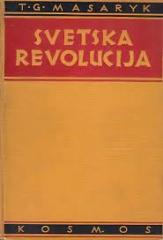
Svetska revolucija

Svetska revolucija

Tomáš G. Masaryk
Kosmos, 1935.
Serbian. Latin alphabet. Hardcover.
9.99
Laserski izazov: "Rat zvijezda"

Laserski izazov: "Rat zvijezda"

David Baker

„Laser Challenge: ‚Star Wars‘“ ist ein Buch von David Baker, das ursprünglich unter dem Titel „The Shape of Wars to Come“ veröffentlicht wurde und die Entwicklung und Auswirkungen der Lasertechnologie im militärischen Kontext während des Kalten Krieges un

Globus, 1985.
Croatian. Latin alphabet. Hardcover with dust jacket.
5.28 - 7.42
Agresija na Republiku Bosnu i Hercegovinu: Planiranje, priprema, izvođenje

Agresija na Republiku Bosnu i Hercegovinu: Planiranje, priprema, izvođenje

Smail Čekić

The book presents the most comprehensive documentary account of the planning, preparation and execution of the aggression against the Republic of Bosnia and Herzegovina from 1992 to 1995. It is based on original documents from the VRS, the RS Ministry of

Kult/B, 2004.
Croatian. Latin alphabet. Hardcover.
The book consists of two volumes
42.56
Vješala za generale

Vješala za generale

Jovo Popović
Stvarnost, 1986.
Croatian. Latin alphabet. Paperback.
9.99
Posljednji dani Hitlera

Posljednji dani Hitlera

Hugh Redwald Trevor-Roper

A study reconstructing the events in Hitler's bunker. The author, a British historian and intelligence officer, was tasked with investigating the circumstances of Hitler's death, debunking the propaganda and rumors that circulated after the fall of the Th

Zora, 1951.
Croatian. Latin alphabet. Paperback with dust jacket.
7.56 - 11.26
Svetozar Pribićević u opoziciji (1928-1936)

Svetozar Pribićević u opoziciji (1928-1936)

Ljubo Boban

One of the essential features of Pribićević's politics is the continuous process of transformation and improvement of attitudes and concepts. He followed the circumstances around him, in the country and abroad, and often reacted directly to them, expresse

Institut za hrvatsku povijest, 1973.
Croatian. Latin alphabet. Hardcover.
7.54 - 7.86