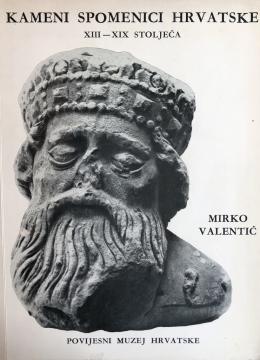
Kameni spomenici Hrvatske XIII-XIX stoljeće
One copy is available
- Yellowed pages
- Slight damage to the cover
- Underlined with pen/felt pen

One copy is available
Are you interested in another book? You can search the offer using our search engine or browse books by category.
It is a work intended primarily for young people, written in a simple, accessible style, with the aim of creating a positive image of Tito as a revolutionary, statesman and leader of the national liberation struggle.
The book contains an account of the history of Croatia from 1918 to 1998 in four historical periods (1918-1941; 1941-1945, 1945-1990 and 1990-1998).
The book depicts the development of a Bosnian bey family that, throughout the 19th and 20th centuries, transformed from a landowning family into a modern bourgeois family, reflecting broader social changes in Bosnia and Herzegovina.
Academician Ljubo Boban, in his work Croatia in the Archives of the Government in Exile 1941–1943, brings together a collection of diplomatic reports from various European and international representative offices of the Yugoslav government in exile during
The content of the book is real and experienced in the enslaved homeland, in the dictatorship and Tito's prisons.
Amir Duranović's book reconstructs in detail the dramatic year 1966 and the Fourth (Brion) Session of the Central Committee of the Communist Party of Yugoslavia (July 1–2, 1966), at which Aleksandar Ranković, the long-time head of the UDB and vice preside