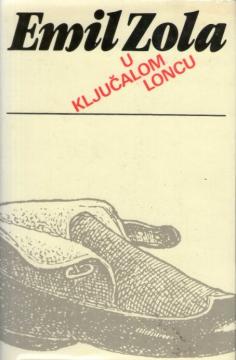
U ključalom loncu

U ključalom loncu

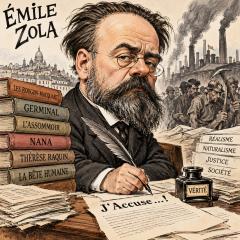
Émile Zola

The main character, Jean Makar, is a poor laborer who works on the Paris railway. Through his story, the novel explores the themes of social inequality, the struggle for survival and the influence of the environment on the individual.

Žan Makar is a man who struggles to survive in difficult conditions. He is surrounded by corrupt and immoral people, and his family also has its secrets. Through Jean's story, Zola shows how environment, society and heritage shape his character and destiny.

The novel explores the theme of the working class and their struggle for a better life. Through Jean's struggle for justice and equality, Zola criticizes social injustices and inhumanity.

In the boiling pot, we meet different characters, their passions, ambitions and weaknesses. Through their stories, Zola creates a picture of Paris and the society of that time.

Original title
Pot bouille
Translation
Milan Đorđević
Editor
Radovan Ždrale
Graphics design
Bogdan Kršić
Dimensions
20 x 14 cm
Pages
400
Publisher
Matica srpska, Novi Sad, 1986.
 
Distribution: 10,000 copies
 
Latin alphabet. Hardcover with dust jacket.
Language: Serbian.

One copy is available

Condition:Used, excellent condition
Damages or inconvenience notice:
  • Traces of patina
Discounted price: 6.244.68
25% discount is valid until 6/14/26 11:59 pm
 

Are you interested in another book? You can search the offer using our search engine or browse books by category.

You may also be interested in these titles

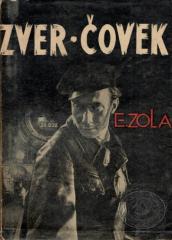
Zver-čovek

Zver-čovek

Émile Zola

The novel explores the destructive forces of inheritance, passion, and violence in modern industrial society. The action takes place largely on the railroad, a symbol of speed, destiny, and inevitable doom. “Beast Man” is the first description of crime in

Nolit, 1940.
Serbian. Latin alphabet. Paperback with dust jacket.
56.32
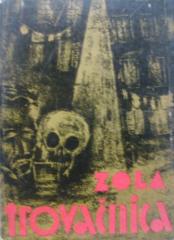
Trovačnica

Trovačnica

Émile Zola

The novel The Poisoner was published in sequels during 1876, and in book form in 1877. It is the story of a woman's struggle for happiness in the working class of Paris.

Rad, 1955.
Serbian. Latin alphabet. Hardcover with dust jacket.
8.627.49 - 9.998.62
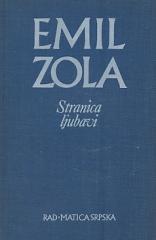
Stranica ljubavi

Stranica ljubavi

Émile Zola
Rad, 1974.
Serbian. Latin alphabet. Hardcover.
5.84
Magla istorije

Magla istorije

Dobrilo Pavić

Through essays, reflections, and historical accounts, the author attempts to explain how past events have shaped the contemporary identity of peoples and societies in this region.

Komazec, 2012.
Serbian. Latin alphabet. Paperback.
5.00
Zlatno telešce

Zlatno telešce

Ilja Iljf, Evgenij Petrov

The Golden Calf (1931) follows the ingenious con artist Ostap Bender, who in Soviet Russia during the first five-year plan seeks a secret millionaire in order to get rich, encountering the absurdity of bureaucracy, the new Soviet man, and his own downfall

Naklada Binoza, 1934.
Croatian. Latin alphabet. Hardcover with dust jacket.
9.74
Pod Nehajem

Pod Nehajem

Vjenceslav Novak

Under Nehaj (1892) is the second novel by Vjenceslav Novak and one of the key works of Croatian realism. In the edition edited by Slavko Ježić (the second volume of Collected Works), this "story from Senj life" provides a powerful picture of the writer's

Minerva nakladna knjižara, 1931.
Croatian. Latin alphabet. Hardcover.
3.34 - 5.64