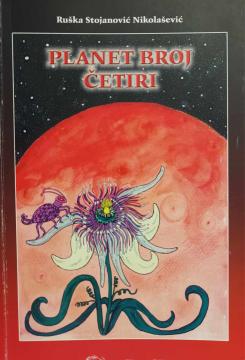
"Planet Number Four" by Ruska Stojanović Nikolašević explores various themes, some of which include space, stars, planets, travel and mysterious spaces.
The author uses poetic language to take us on an imaginary journey through all the topics in this book.
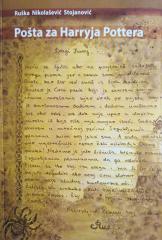
The girl ˝RU˝ doesn't have a postman owl, so she sends her letters to Harry Potter by sea waves, spring waves, morning dawn, seagulls, falcons, and most often by swallows!
The title poem, "The Black Rabbit," represents a kind of symbolist maneuver within "real" poetry, because like Baudelaire's "Albatross," it possesses a pronounced unambiguous charge.
Milčec is still just as in love with the city. He conquers it just as youthfully. The siege of Zagreb has made no one smaller. The city grows and the conqueror continues to conquer the unconquerable.
Jergović's stories ironically depict a childhood and an upbringing. The only reality of this autobiographical prose is moving from place to place and from country to country. Strength and beauty are found in the subtle threads with which he weaves his ima
Marino Zurl (1929–2006), a Croatian writer and publicist, writes in his novel Trumpet for Bleiburg about one of the most controversial and taboo topics in Croatian history – the Bleiburg Massacre and the Stations of the Cross in 1945.
Brkić i sin, 1997.
Croatian. Latin alphabet. Paperback.
14.68 €
Erotic Novels • Croatian literature • Psychological novel
Branislav Glumac published a novel without periods or commas in 1974, as the relentless stream of thought of a young rebel. Published in socialist Yugoslavia, the work caused a scandal with its openness and became a classic about generational rebellion.