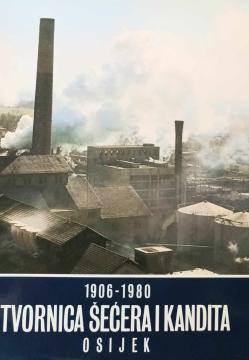
Tvornica šećera i kandita Osijek 1906-1980

Tvornica šećera i kandita Osijek 1906-1980

Josip Manc

The book is richly illustrated with photos and documents that further depict the history of the factory.

The book "Sugar and candy factory Osijek 1906 - 1980" provides a detailed overview of the history and development of the sugar and candy factory in Osijek. Here's a quick overview of the content:

  1. Establishment of the factory: The establishment of the factory in 1906 is described, including the reasons for its establishment and the first steps in production.
  2. Development through the decades: The development of the factory through different stages is shown, including technological innovations, expansion of production capacities and adaptations to market conditions.
  3. Economic and social impact: The impact of the factory on the local economy and society is analyzed, including employment, urbanization and social activities.
  4. Technological progress: The introduction of new technologies and production methods that improved the efficiency and quality of products is described.
  5. Cultural and sports activities: The factory's involvement in the organization of cultural and sports events for workers and the local community is shown.
  6. Challenges and adaptations: It describes how the factory overcame various challenges, including economic crises and changes in market conditions.

Translation
Marija Malbaša, Zorica Vladetić, Danica Kožić
Editor
Josip Manc
Illustrations
Božidar Grigić
Graphics design
Stjepan Kes
Dimensions
29.5 x 21 cm
Pages
135
Publisher
Tvornica šećera i kandita, Osijek, 1980.
 
Latin alphabet. Hardcover with dust jacket.
Language: Croatian.

No copies available

The last copy was sold recently.

 

Are you interested in another book? You can search the offer using our search engine or browse books by category.

You may also be interested in these titles

Izgon Mongola iz Hrvatske

Izgon Mongola iz Hrvatske

Ante Tresić-Pavičić

The book The Expulsion of the Mongols from Croatia, published in 1942 on the occasion of the seven hundredth anniversary of the Mongol invasion and the events of 1242, is one of the most famous historical works by Ante Tresić-Pavičić.

Matica hrvatska, 1942.
Croatian. Latin alphabet. Hardcover.
7.26
Baranja 1941-1945

Baranja 1941-1945

Nada Lazić

The monograph "Baranja 1941–1945" is the first systematic study of the history of Baranja during World War II. A detailed account of the Hungarian occupation, terror, resistance and liberation of this area.

Historijski institut Slavonije, 1979.
Croatian. Latin alphabet. Hardcover.
9.34 - 9.36
Andrija Matijaš Pauk: Heroj u ratu - hrvatski ponos u miru

Andrija Matijaš Pauk: Heroj u ratu - hrvatski ponos u miru

Petra Šimić

The exhibition catalog presents the life and war journey of Andrija Matijaš Pauk, one of the most famous Croatian commanders, highlighting his contribution to the defense of Croatia in the Homeland War.

Muzej Domovinskog rata u Splitu, 2023.
Croatian. Latin alphabet. Paperback.
13.42
Slavonija – povijesne rasprave i crtice, knjiga I.

Slavonija – povijesne rasprave i crtice, knjiga I.

Slavonia I is a reprint of Horvat's collection of 39 shorter studies, treatises and sketches on the history of Slavonia from 1936. The first of the planned books is the fruit of the author's decades-long research into the regional past.

Privlačica, 1992.
Croatian. Latin alphabet. Paperback.
9.32
Ko je bio Alojzije Stepinac

Ko je bio Alojzije Stepinac

Ivan Cvitković

A sociological-historical study in which Ivan Cvitković analyzes the activities of the Archbishop of Zagreb in the context of the Independent State of Croatia, World War II and the post-war period, relying on sources available at the time.

NIŠRO Oslobođenje, 1986.
Croatian. Latin alphabet. Hardcover with dust jacket.
11.62
Cvit razgovora naroda i jezika iliričkoga aliti rvackoga

Cvit razgovora naroda i jezika iliričkoga aliti rvackoga

Filip Grabovac

"The Flower of Conversation" is the most famous work of the Franciscan friar and writer Filip Grabovac (1697–1749), first printed in Venice in 1747, and published in a critical edition in the "Old Croatian Writers" edition.

Jugoslavenska akademija znanosti i umjetnosti (JAZU), 1951.
Croatian. Latin alphabet. Hardcover with dust jacket.
14.26