Prodavanje bolesti : Kako nas farmaceutska industrija pretvara u pacijente

Prodavanje bolesti : Kako nas farmaceutska industrija pretvara u pacijente

Ray Moynihan, Alan Cassels

This exciting book will reveal to you the true motivations behind "caring" for our health and the cunning tricks used to convince us that mild ailments are actually dangerous disorders that can only be cured with medication.

Are you just shy or do you need social anxiety medication? Is your nervousness and tension curable with premenstrual dysphoric disorder pills? Are you focused on health or worried about illness?

Thirty years ago, the head of one of the most famous pharmaceutical companies in the world told a Fortune magazine reporter how outraged he was because his company's potential market was limited to sick people and how he had long dreamed of producing drugs for healthy people. Today, people are living his dream.

Ray Moynihan, one of the world's leading medical journalists, and Alan Cassels, a Canadian researcher and writer, are the authors of a book that exposes the background to the carefully maintained notion of medical authority and benevolent concern for our health.

Modern pharmacy brings enormous profits, which are sometimes incompatible with the interests of patients. Using their great influence over medical science, pharmaceutical companies promote fear in order to redefine human disease and expand disease definitions in order to expand the drug market.

Original title
Selling sickness
Translation
Aleksandra Barlović
Editor
Danijela Duvnjak
Graphics design
Zlatko Havoić
Dimensions
21 x 14.5 cm
Pages
256
Publisher
Planetopija, Zagreb, 2007.
 
Latin alphabet. Paperback.
Language: Croatian.
ISBN
978-9-53257-062-5

No copies available

The last copy was sold recently.


Are you interested in another book? You can search the offer using our search engine or browse books by category.

You may also be interested in these titles

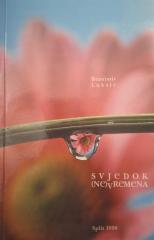
Svjedok (ne)vremena

Svjedok (ne)vremena

Branimir Lukšić

The book is both a personal and social testimony to the turbulent times the Croatian people went through, especially during the 20th century.

Matica hrvatska, 1998.
Croatian. Latin alphabet. Paperback.
8.14
Povijest otkrića i istraživanja 1: Početak istraživanja

Povijest otkrića i istraživanja 1: Početak istraživanja

Felix Barker, Malcolm Ross-Macdonald, Duncan Castlereagh

The book describes man's discoveries of parts of planet Earth that were accidental or planned. The period from 50,000 years ago to today's efforts in space exploration is described.

Mladinska knjiga, 1976.
Croatian. Latin alphabet. Hardcover.
37.26 (set)
Ekspedicije u nepoznato: historija velikih geografskih otkrića na našoj planeti

Ekspedicije u nepoznato: historija velikih geografskih otkrića na našoj planeti

Erich Rackwitz

The work was originally published in 1959 and was awarded the first prize for the promotion of literature for children and young people in 1960 and has been translated into several languages. As a follow-up, Rackwitz wrote "Sunken Worlds - Far S

Epoha, 1965.
Croatian. Latin alphabet. Hardcover with dust jacket.
9.78
Na izvorima matematike

Na izvorima matematike

Vladimir Devidé

At the Sources of Mathematics is a popular science work by Croatian mathematician, Japanologist, and academician Vladimir Devidé (1925–2010), published in 1979 in Osijek.

Revija, 1979.
Croatian. Latin alphabet. Paperback.
11.32
Očekujući novorođenče

Očekujući novorođenče

Asim Kurjak

One of the best guides for future parents on pregnancy and newborns. Kurjak, a world-renowned gynecologist and perinatology specialist, writes in an accessible, jargon-free manner, emphasizing prevention and emotional support.

Mladost, 1984.
Croatian. Latin alphabet. Hardcover with dust jacket.
8.46
Od Pola do Malnara: Putnici i istraživači u hrvatskoj kulturi od 13. do 20. stoljeća

Od Pola do Malnara: Putnici i istraživači u hrvatskoj kulturi od 13. do 20. stoljeća

Juraj Bubalo

The book by Zagreb travel writer and professor Juraj Bubalo is a kind of encyclopedia of Croatian travelers and explorers. Unique in Croatian non-fiction, it popularizes the culture of exploration and reminds us that Croats have been part of global discov

Meridijani, 2024.
Croatian. Latin alphabet. Hardcover.
28.32