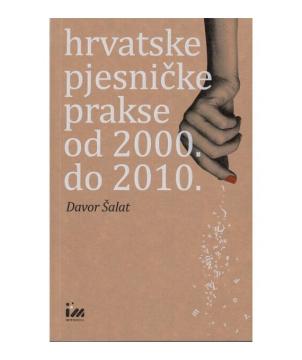
Hrvatske pjesničke prakse od 2000. do 2010.

Hrvatske pjesničke prakse od 2000. do 2010.

Davor Šalat

Šalat's book draws a systematic, exhaustive and theoretically conceived map of texts, poets, styles and lyrical trends in the first decade of the twenty-first century.

Davor Šalat's analytical discourse skilfully combines procedures, methods and concepts of literary criticism, stylistics, sociology and philosophy of literature. A layered and reliable hermeneutic presentation of Croatian poetry in the first decade of the 21st century is based on such a "polyperspective" discourse. Šalat's presentation of the topic varies between principled, finely measured reflections on the literary and cultural context and literary life on the one hand, and appropriate and lucid readings of carefully selected texts-examples from thematic works on the other. Sovereignly moving between details and global features, individual figures and poetic or rhetorical constants, combining the procedures and insights of textual analysis, stylistic criticism and philosophical-sociological problematization of literature, the author built a complex hermeneutic apparatus with which he appropriately observed and interpreted poetic shifts, rhetorical , stylistic and cognitive changes in the works of ten contemporary poets. The book enriches the Croatian science of literature and the interpretation of selected poetic discourses with refined stylistic readings and theoretically based insights.

Krešimir Bagić

Dimensions
20 x 13 cm
Pages
362
Publisher
MeandarMedia, Zagreb, 2023.
 
Latin alphabet. Paperback.
Language: Croatian.
ISBN
978-9-53334-324-2

One copy is available

Condition:Unused
 

Are you interested in another book? You can search the offer using our search engine or browse books by category.

You may also be interested in these titles

Kako smo lomili noge

Kako smo lomili noge

Miro Gavran

The novel How We Broke Our Legs (1997), a humorous and tender chronicle of family life through four decades of Croatian history, follows the fate of three generations of a Slavonian family from 1951 to 1992.

Mozaik knjiga, 2007.
Croatian. Latin alphabet. Paperback.
9.36
Nema slonova u Meksiku

Nema slonova u Meksiku

Zoran Pilić

These stories will make us laugh, but also imperceptibly take us to the other, dark side...

Fraktura, 2014.
Croatian. Latin alphabet. Hardcover with dust jacket.
6.98
Mama Leone

Mama Leone

Miljenko Jergović

Jergović's stories ironically depict a childhood and an upbringing. The only reality of this autobiographical prose is moving from place to place and from country to country. Strength and beauty are found in the subtle threads with which he weaves his ima

Durieux, 1999.
Croatian. Latin alphabet. Paperback.
8.566.85
Crni zec (sabrane i nove pjesme)

Crni zec (sabrane i nove pjesme)

Drago Glamuzina

The title poem, "The Black Rabbit," represents a kind of symbolist maneuver within "real" poetry, because like Baudelaire's "Albatross," it possesses a pronounced unambiguous charge.

Vuković & Runjić, 2022.
Croatian. Latin alphabet. Paperback.
8.56 - 9.98
Lica ljubavi

Lica ljubavi

Tomislav Bogdan

The status of the lyrical subject in the canzonier of Đora Držić

Zavod za znanost o književnosti Filozofskoga fakulteta, 2003.
Croatian. Latin alphabet. Paperback.
6.82
Stotina godina (antikronika)

Stotina godina (antikronika)

Dario Harjaček

The novel One Hundred Years by Dario Harjaček provides a panoramic view of Trešnjevka and its inhabitants through a century of changes, ideologies, and human destinies – a mosaic of Zagreb in which life, art, and history intertwine.

Oceanmore, 2025.
Croatian. Latin alphabet. Paperback.
13.42