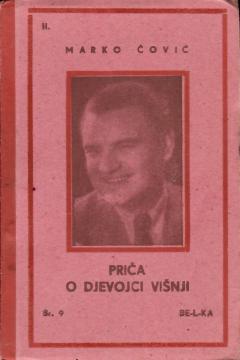
Priča o djevojci Višnji / Dan slobode
Antique

Priča o djevojci Višnji / Dan slobode

Marko Čović

"The Story of the Cherry Girl" and "Freedom Day" are two short stories by Marko Čović that are connected by lyricism, a patriotic tone, and a deep understanding of man's inner struggle.

In "The Story of the Girl Višnja", the author depicts the life of a young, sensitive girl Višnja, her growing up, her first love and facing the challenges of a world that is not always kind to her gentle nature. Višnja's story is intimate, filled with dreams of happiness, but also the disappointments that come with maturing. Through her feelings, attachment to home and native land, the novel carries a strong patriotic charge and a message about loyalty to one's own ideals and values.

In "Freedom Day", Čović depicts the events of a turning point for the individual and the community - the moment of liberation. The focus is on ordinary people, their hopes, fears and sense of responsibility towards their homeland. The heroes of this novella, through personal experiences, testify to the power of freedom, but also to the price it often demands. "Freedom Day" celebrates courage, togetherness and faith in a better tomorrow, emphasizing the importance of preserving human dignity.

Both novels are characterized by a simple, yet emotionally rich style, a pronounced sense of the psychological nuance of the characters, and a sincere attitude towards life, homeland, and man's enduring pursuit of truth, love, and freedom.

Editor
Zlatko Milković
Dimensions
11.5 x 7.5 cm
Pages
122
Publisher
Minerva nakladna knjižara, Zagreb, 1943.
 
Latin alphabet. Paperback.
Language: Croatian.

One copy is available

Condition:Used, excellent condition
 

Are you interested in another book? You can search the offer using our search engine or browse books by category.

You may also be interested in these titles

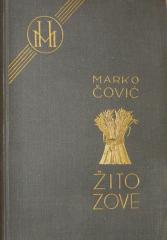
Žito zove

Žito zove

Marko Čović

The Grain Calls (1941) is a collection of short stories and novellas by Marko Čović with Bunjevci-Šokac themes. It vividly and lyrically depicts the everyday life of the Croats of Bačka, their customs, work in the fields, love, suffering and longing for t

Matica hrvatska, 1941.
Croatian. Latin alphabet. Hardcover.
4.99 - 7.86
Pijanac

Pijanac

Mijat Stojanović

"The Drunkard" by Mijat Stojanović (1869) is a folk tale adapted from I. A. Stelzig. A moralistic story about the harmful effects of alcoholism, intended for the general public. A classic example of 19th-century enlightenment literature.

Hrvatsko književno društvo Sv. Jeronima, 1869.
Croatian. Latin alphabet. Hardcover.
32.46
Cvijet pod staklom

Cvijet pod staklom

Antun Matasović

"Flower Under Glass" by Antun Matasović is a collection of short stories, presenting the early stories of the Slavonian Catholic writer with motifs of family, love, everyday life and moral dilemmas. A classic regional reading between the two wars.

Vlastita naklada, 1921.
Croatian. Latin alphabet. Paperback.
11.48
Iz bosanske romantike: novele

Iz bosanske romantike: novele

Šemsudin Sarajlić

From Bosnian Romance (1931) is a collection of short stories in which the author lovingly and nostalgically portrays the life of old Bosnia, the mahalas, customs, sevdah and everyday life of Bosnian Muslims during the Austro-Hungarian rule and immediately

Matica hrvatska, 1931.
Croatian. Latin alphabet. Hardcover.
6.24 - 9.56
Manja djela: Čudnovita dveh kaputov zmešarija Slavka / Glas od Gradne / Književno pismo / Kapetan Izailo / Mešterski list

Manja djela: Čudnovita dveh kaputov zmešarija Slavka / Glas od Gradne / Književno pismo / Kapetan Izailo / Mešterski list

August Šenoa

The twelfth volume of the Collected Works of August Šenoa – a collection of smaller prose and journalistic works: humorous stories, satire, literary letters and historical sketches from the pen of the most significant Croatian writer of the 19th century.

St. Kugli, 1931.
Croatian. Latin alphabet. Hardcover.
12.36
Anđelina i druge pripovijesti

Anđelina i druge pripovijesti

Jozef Cíger Hronský

A collection of short stories by one of the most important Slovak writers of the 20th century, Jozef Hronsky, known for works such as Jozef Mak and Pisár Gráč. Realistic-psychological stories from Slovak rural and small-town life.

Hrvatsko književno društvo Sv. Jeronima, 1940.
Croatian. Latin alphabet. Paperback.
8.26