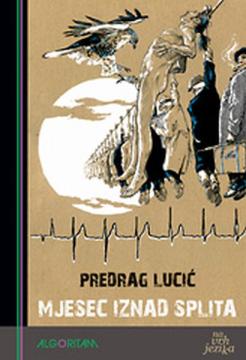
Mjesec iznad Splita

Mjesec iznad Splita

Predrag Lucić

Predrag Lucić's second book of poetry, after "The Lovers from Verona" (2007), is a collection of irony, melancholy and contempt for canons - a dedication to the "ridicules" of Split, those who have woven their antics into the city's collective memory.

Through a dozen poems, Lucić brings to life characters like Karuz, a carpenter from Nazareth who becomes a Split marangun, or J.P. Kamov, a genius condemned to pauperism, where the moon looms over Split like an observer of other people's dreams and defeats. The poems are not just satire; they are hymns of courage and self-identity – the characters are not madmen, but mirrors of ourselves, full of Split's vitality, humor and sadness. "Karuzo" evokes biblical irony, "Mjesec iznad Splita" – an epic about a city where the sacred mixes with the profane, and love with escape.

Lucić's language is raw, rhythmic, full of Split dialect and surreal images: the moon as a witness, the sea as oblivion, the characters as "trainers" of existence. The collection is a critique of social hypocrisy, but also a love letter to his native Split – a place where unrest turns into art. After Lucić's death, the collection was published as part of "The Southern Courtyard" (2024), a legacy that makes him a significant author of the Croatian language.

Editor
Kruno Lokotar
Illustrations
Alem Ćurin
Dimensions
19 x 13 cm
Pages
175
Publisher
Algoritam, Zagreb, 2012.
 
Latin alphabet. Paperback.
Language: Croatian.

One copy is available

Condition:Used, excellent condition
Discounted price: 6.344.76
25% discount is valid until 3/16/26 11:59 pm
 

Are you interested in another book? You can search the offer using our search engine or browse books by category.

You may also be interested in these titles

Seljaci u gradu: izvorna šaljiva igra u dva čina

Seljaci u gradu: izvorna šaljiva igra u dva čina

Nikola Kos

The humorous play Villagers in the City presents a humorous depiction of the encounter between rural and urban mentality. The plot revolves around the arrival of rural characters in the city, where they are confronted with urban customs and lifestyles, wh

St. Kugli, 1883.
Croatian. Latin alphabet. Paperback.
6.74
Duhovitost duhovnih 2

Duhovitost duhovnih 2

Monah Dorotej

After the great success of the book Spiritual Wit, we present to you its sequel - Spiritual Wit 2, which collects spiritual jokes, anecdotes, and sayings from everyday life.

Verbum, 2006.
Croatian. Latin alphabet. Paperback.
4.98
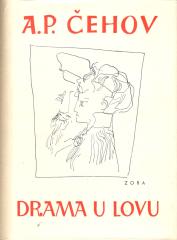
Sabrana djela A. P. Čehova #1: Humoreske

Sabrana djela A. P. Čehova #1: Humoreske

Anton Pavlovič Čehov

This book includes Chekhov's works from 1880-1885, i.e. humoresques, short stories, and sketches, starting with Letters to a Learned Neighbor, which Chekhov considered the beginning of his literary career.

Zora, 1959.
Croatian. Latin alphabet. Hardcover with dust jacket.
9.54
Nevini lopovi: satire

Nevini lopovi: satire

Fadil Hadžić

The satirical stories of Fadil Hadžić, one of the most performed playwrights in our country, cover a wide spectrum of contemporary social, ideological, cultural and psychological peculiarities.

Globus, 1988.
Croatian. Latin alphabet. Hardcover with dust jacket.
8.24
Žene, bajke, kraljice

Žene, bajke, kraljice

Nada Gašić, Julijana Adamović, Nataša Govedić, Vera Vujović, Lada Žigo, Jadranka Pintarić, Jadran...

Women, Fairy Tales, Queens – is the first in a series of story collections intended for an adult audience in which nine Croatian female writers decided to give voice to female characters from fairy tales.

Kreativna mreža, 2021.
Croatian. Latin alphabet. Paperback.
9.98
Kvaka braka

Kvaka braka

Melanie Gideon

Melanie Gideon, an American writer known for her humorous novels about family dynamics, dissects the monotony of marriage in the age of social media in The Marriage Trap (2012).

Algoritam, 2013.
Croatian. Latin alphabet. Paperback.
7.36