Mjesec iznad Splita

Mjesec iznad Splita

Predrag Lucić

Predrag Lucić's second book of poetry, after "The Lovers from Verona" (2007), is a collection of irony, melancholy and contempt for canons - a dedication to the "ridicules" of Split, those who have woven their antics into the city's collective memory.

Through a dozen poems, Lucić brings to life characters like Karuz, a carpenter from Nazareth who becomes a Split marangun, or J.P. Kamov, a genius condemned to pauperism, where the moon looms over Split like an observer of other people's dreams and defeats. The poems are not just satire; they are hymns of courage and self-identity – the characters are not madmen, but mirrors of ourselves, full of Split's vitality, humor and sadness. "Karuzo" evokes biblical irony, "Mjesec iznad Splita" – an epic about a city where the sacred mixes with the profane, and love with escape.

Lucić's language is raw, rhythmic, full of Split dialect and surreal images: the moon as a witness, the sea as oblivion, the characters as "trainers" of existence. The collection is a critique of social hypocrisy, but also a love letter to his native Split – a place where unrest turns into art. After Lucić's death, the collection was published as part of "The Southern Courtyard" (2024), a legacy that makes him a significant author of the Croatian language.

Urednik
Kruno Lokotar
Ilustracije
Alem Ćurin
Dimenzije
19 x 13 cm
Broj strana
175
Izdavač
Algoritam, Zagreb, 2012.
 
Latinica. Broširano.
Jezik: Hrvatski.

Jedan primerak je u ponudi

Stanje:Korišćeno, u odličnom stanju
Dodato u korpu!
 

Zanima Vas i neka druga knjiga? Možete pretražiti našu ponudu pomoću pretrage ili prelistati knjige po kategorijama.

Možda će Vas zanimati i ovi naslovi

Žene, bajke, kraljice

Žene, bajke, kraljice

Nada Gašić, Julijana Adamović, Nataša Govedić, Vera Vujović, Lada Žigo, Jadranka Pintarić, Jadran...

Women, Fairy Tales, Queens – is the first in a series of story collections intended for an adult audience in which nine Croatian female writers decided to give voice to female characters from fairy tales.

Kreativna mreža, 2021.
Hrvatski. Latinica. Broširano.
9,98
Gradić gdje je vrijeme stalo

Gradić gdje je vrijeme stalo

Bohumil Hrabal

Bohumil Hrabal, a Czech writer known for his lyrical grotesque and humor, in his novel The Town Where Time Stood Still evokes childhood in the small town of Libeň (part of Prague), where time seems to stand still in a magical but melancholic world.

Hena Com, 2006.
Hrvatski. Latinica. Broširano.
7,62
Liga ribara

Liga ribara

Marija Andrijašević

The League of Fishermen brings together everything that makes us read Marija Andrijašević: complex characters, flexible and sumptuous language, convincing dialogues and stories that will hook you with discreet humor.

Oceanmore, 2024.
Hrvatski. Latinica. Broširano.
11,98
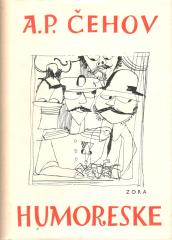
Sabrana djela A. P. Čehova #1: Humoreske

Sabrana djela A. P. Čehova #1: Humoreske

Anton Pavlovič Čehov

This book includes Chekhov's works from 1880-1885, i.e. humoresques, short stories, and sketches, starting with Letters to a Learned Neighbor, which Chekhov considered the beginning of his literary career.

Zora, 1959.
Hrvatski. Latinica. Tvrde korice s omotom.
9,54
Ljepuškasta djeca

Ljepuškasta djeca

Jiří Šotola

The novel Beautiful Children depicts the world of adolescent rebels in a "re-education" colony - a prison disguised as a school. Written in the spirit of the Prague Spring, the work criticizes the communist system through a dynamic, cinematic narrative.

August Cesarec, 1986.
Hrvatski. Latinica. Tvrde korice s omotom.
4,82 - 4,84
Pile na ražnju

Pile na ražnju

Jiří Šotola

Jiří Šotolas quasi-historischer Roman „Pile on a Spit“ (dt. „Der Haufen auf dem Spieß“) schildert die Absurdität des Lebens anhand der Geschichte des Antihelden – des Puppenspielers Matija Pile (Matěj Kuře), der während der Napoleonischen Kriege die Gesch

August Cesarec, 1983.
Hrvatski. Latinica. Tvrde korice s omotom.
4,82 - 4,84