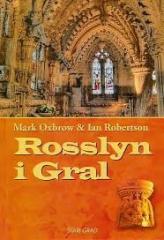
Vitezovi Templari u Novome svijetu: Kako je Henry Sinclair donio Gral u Akadiju

Vitezovi Templari u Novome svijetu: Kako je Henry Sinclair donio Gral u Akadiju

William F. Mann

Almost a hundred years before Columbus discovered the New World, Scottish Prince Henry Sinclair sailed to what is now Nova Scotia. It was this same Prince Henry Sinclair who offered refuge to the Knights Templar, who were fleeing persecution by the French

The book by the Canadian author William F. Mann presents a fascinating thesis that the Knights Templar, after the abolition of the Order in 1307–1314, fled across the Atlantic and centuries before Columbus established secret bases in today's eastern Canada and northeastern USA (Nova Scotia, Oak Island, New England).

Mann, a descendant of one of the Masonic families associated with the area, claims that the legendary Templar treasure (which includes the Holy Grail, the Ark of the Covenant and original documents about the life of Jesus) is hidden in the New World. The key evidence, he says, is: the mysterious stone crosses and inscriptions on Oak Island, the geometric arrangement of megalithic structures in New England that corresponds to Templar principles, and ancient maps (eg the Zeno map) showing the Atlantic coast a century before the official discovery.

The author connects the Templar fleet from La Rochelle in 1307 with later Scottish Freemasons and the son of Henry Sinclair, who supposedly sailed to Nova Scotia in 1398. The book is rich in illustrations, maps, and family lore, and Mann claims that traces are still visible in the landscape. Although mainstream historians dismiss the thesis as speculative, the book remains a favorite among alternative history enthusiasts and the inspiration for the series The Curse of Oak Island.

Original title
The Knights Templar in the New World
Translation
Petra Štrok
Editor
Božica Cikuša, Zdravko Cikuša
Graphics design
Zlatko Bilandžija
Dimensions
24 x 17 cm
Pages
313
Publisher
Stari grad, Zagreb, 2004.
 
Latin alphabet. Hardcover.
Language: Croatian.
ISBN
978-9-53671-636-4

Multiple copies are available

Copy number 1

Condition:New
Discounted price: 15.2810.70
30% discount is valid until 12/31/26 11:59 pm

Copy number 2

Condition:New
Discounted price: 15.2610.68
30% discount is valid until 12/31/26 11:59 pm

Copy number 3

Condition:New
Discounted price: 15.2410.67
30% discount is valid until 12/31/26 11:59 pm
 

Are you interested in another book? You can search the offer using our search engine or browse books by category.

You may also be interested in these titles

Srednjevekovna srpska država: izabrani izvori

Srednjevekovna srpska država: izabrani izvori

Sima Ćirković

"The Medieval Serbian State - Selected Sources" is a school collection of primary historical sources for teaching medieval Serbian history in secondary schools in Yugoslavia.

Školska knjiga, 1959.
Croatian. Latin alphabet. Paperback.
6.74
Vjesnik Hrvatskoga arheološkoga društva, sv III. / 1898

Vjesnik Hrvatskoga arheološkoga društva, sv III. / 1898

Josip Brunšmid, Vjekoslav Klaić, Fran Bulić, Emilij Laszowski, Luka Jelić

The third volume of "Vjesnik" for 1898 contains genealogical and historical contributions on the Croatian nobility, archaeological and epigraphic studies, ethnological and military-topographic sketches, and a report on the work of the historical society.

Hrvatsko arheološko društvo, 1899.
Croatian. Latin alphabet. Hardcover.
32.56
Fides publica (Javna vera) u pravnoj istoriji Srba i Hrvata do kraja XV veka

Fides publica (Javna vera) u pravnoj istoriji Srba i Hrvata do kraja XV veka

Marko Kostrenčić

"Fides publica (Public Faith)" (1930) is a notable legal-historical study by Marko Kostrenčić on the development of public credibility of documents, notarial institutions, and legal certainty in medieval Croatian and Serbian lands.

24 sata, 1930.
Serbian. Cyrillic alphabet. Hardcover.
14.62
Starohrvatska seoska zajednica

Starohrvatska seoska zajednica

Miho Barada

In his work Starohrvatska seoska zajednica (The Old Croatian Village Community) (1957), Miho Barada analyzes the social and agrarian organization of early medieval Croatian villages, their institutions, ownership relations, and common land based on origin

Jugoslavenska akademija znanosti i umjetnosti (JAZU), 1957.
Croatian. Latin alphabet. Paperback.
10.00
Bribirski knezovi od plemena Šubić do god. 1347.

Bribirski knezovi od plemena Šubić do god. 1347.

Vjekoslav Klaić

A monograph on the rise and fall of the powerful Croatian noble family of Šubić Bribirski with a genealogical table, written by Vjekoslav Klaić (1849–1928), one of the most important Croatian historians of the 19th and early 20th centuries.

Matica hrvatska, 1897.
Croatian. Latin alphabet. Paperback.
14.32 - 14.34
Izgon Mongola iz Hrvatske

Izgon Mongola iz Hrvatske

Ante Tresić-Pavičić

The book The Expulsion of the Mongols from Croatia, published in 1942 on the occasion of the seven hundredth anniversary of the Mongol invasion and the events of 1242, is one of the most famous historical works by Ante Tresić-Pavičić.

Matica hrvatska, 1942.
Croatian. Latin alphabet. Hardcover.
7.26