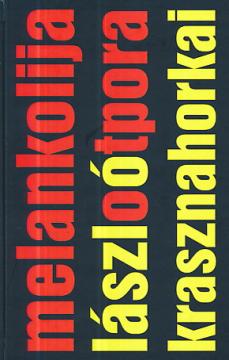
Melankolija otpora
This novel by László Krasnahorkai introduces the reader to the dark depths of a world devastated in every sense, in which everyday logic no longer applies and in which all usual ideas about life are mercilessly shattered.
The novels The Satanic Tango (1985) and The Melancholy of Resistance (1989) could not remain the great secret of Hungarian literature for long due to their excellence, and László Krasznahorkai soon became a new, unavoidable name on the world literary scene, and today, after publishing about twenty novels, stories, essays, etc., he has entered the shortlist of candidates for the Nobel Prize. He has been praised by prominent authors such as Sebald and Susan Sontag, and he has gained wider popularity through the films he created with Béla Tarr based on his novels and scripts. Their unconventional teamwork resulted in magic, a pulsating combination of the sacred and the demonic, but also the circus and the sublime – an attractive-repulsive intertwining of the worlds of Krasznahorkai's novels and Tarr's films, which are difficult to enter, and even more difficult, much more difficult, if not impossible, to exit. In The Melancholy of Resistance, which New Yorker critic James Wood called "a comedy of the apocalypse," unusual events begin to unfold when a mysterious circus troupe arrives in a small provincial town in southern Hungary with a giant whale that attracts the curious and a charismatic freak, the Prince, who attracts the discontented... In addition to the intriguing plot, the more demanding reader will be attracted by the author's suggestive, meandering long sentences; the dizzying ambiguity of events; the apocalyptic, grotesque scenes that question the possibilities of resistance to the ruling system; and the power of the omniscient narrative voice that describes the most subtle moments of the psychological fluctuations of the novel's heroes... These are just some of the features of Krasznahorkai's fascinating authorial writing, a man who may not, like his hero, have deserved the award "for the simplest and most purposeful way of leading a life," but who "with his extraordinary talent gilded the boredom of everyday life with the sphere of art."
One copy is available
- A message of a personal nature