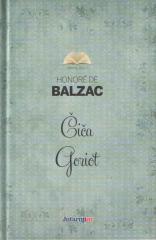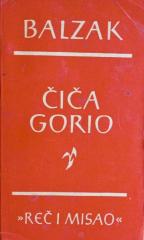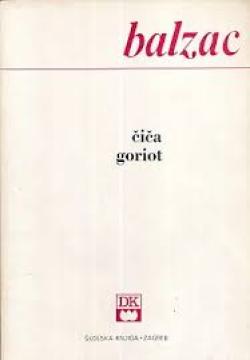
Čiča Goriot
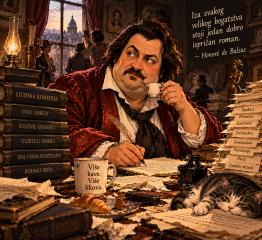
Uncle Goriot is one of the most famous and important novels by Honoré de Balzac, published in 1835. It is part of his vast cycle The Human Comedy (La Comédie humaine), and is considered perhaps the most successful work in that cycle.
The story takes place in Paris in 1819, during the restoration of the Bourbon monarchy, when society is undergoing great changes — money and social status become more important than anything else.
The main characters are three characters whose destinies intertwine in the dirty, cheap boarding house of Madame Vauquer:
- Uncle Goriot — an elderly former vermicelli and pasta merchant, a once rich man who spent all his fortune on his two daughters (Anastasie de Restaud and Delphine de Nucingen). They have married rich men, but now despise him, are ashamed of him and exploit him to the utmost. He lives in misery, but still loves them unconditionally and forgives them everything.
- Eugène de Rastignac — a young, ambitious law student from the provinces, poor but of noble origin. He came to Paris to break into high society. Through his relatives, he gets acquainted with the salons of high society and understands the cruelty of the rules of the game: money, connections and ruthlessness rule everything.
- Vautrin — a mysterious, charismatic man in the boarding house, actually a fugitive and a criminal (later revealed to be Colin). He cynically explains to the young Rastignac how Paris works: honesty leads nowhere, you have to step over corpses to get to wealth.
The novel follows Rastignac's "enlightenment" — from a naive provincial to a man who accepts the cruelty of society. In parallel, we follow the tragic fate of Uncle Goriot, who dies in misery and abandoned by his daughters who owe him everything.
The most moving part is Goriot's death — his daughters do not visit him on his deathbed because they are busy with their own problems (one saves the honor of his lover, the other solves her husband's financial embezzlement). Only Rastignac and the medical student Bianchon take care of him. In the end, from the Père-Lachaise cemetery, Rastignac looks at the wealthy districts of Paris and shouts: "And now it's up to the two of us!" — accepting the rules of the game without illusions.
One copy is available