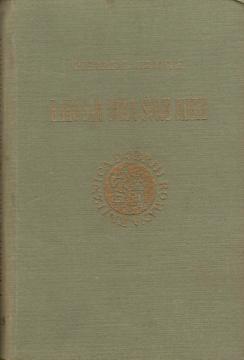
Kako sam ubila svoje dijete
Antique
Rare book

Kako sam ubila svoje dijete

Pierre L'ermite

A moralistic novel written in the form of a confession in which a young woman tells how she had an abortion out of vanity, fear of scandal, and frivolity, and then experiences deep remorse, suffering, and spiritual conversion.

Pierre l'Ermite (real name Edmond Loutil, 1863–1931) was a French Catholic priest, preacher, and prolific writer of popular moralistic novels. The novel Comment j'ai tué mon enfant was published in France in 1925/1926, and the Croatian translation by Robert Schütz was published in 1929 in the prestigious edition Knjižnica dobrih romana.

The work is written in the first person as a poignant confession of a woman who, for selfish reasons (vanity, fear of losing her social position, frivolous life), decided to terminate her pregnancy. The novel follows her inner drama in detail – from the initial justification of the act, through the terrible feeling of guilt and mental suffering, to the final conversion and repentance.

Pierre l'Ermite wrote the book as a powerful Catholic apologia against abortion, promiscuity, and the modern, secularized way of life. The style is extremely sentimental, dramatic and didactic, typical of early 20th century Catholic fiction. The author spares no expense in emotional descriptions of the heroine's maternal remorse, nightmares and spiritual emptiness.

In interwar Croatia, the novel was very popular among Catholic audiences because it directly responded to current debates about the moral decline of society. Today, it is read primarily as a document of the times and an example of Catholic moral prose, and less as high literature due to its pronounced tendentiousness and pathos.

It is a rare antiquarian edition that is sought after by collectors of older Croatian fiction.

Original title
Comment j'ai tué mon enfant
Translation
Robert Schütz
Editor
Josip Andrić
Illustrations
L. Gignoux
Dimensions
19 x 12.5 cm
Pages
264
Publisher
Knjižnica dobrih romana, Zagreb, 1929.
 
Latin alphabet. Hardcover.
Language: Croatian.

One copy is available

Condition:Used, excellent condition
 

Are you interested in another book? You can search the offer using our search engine or browse books by category.

You may also be interested in these titles

Bartolomejska noć: knjiga 1-2

Bartolomejska noć: knjiga 1-2

Alexandre Dumas

This book focuses on one of the bloodiest events in French history – St. Bartholomew's Day in 1572, when thousands of French Protestants were massacred in Paris and across the country.

Epoha, 1966.
Croatian. Latin alphabet. Hardcover with dust jacket.
The book consists of two volumes
9.36
Vrijeme nasilja

Vrijeme nasilja

Jean-Pierre Simon

A Time of Violence (1966) is an anti-war and activist novel by French writer Jean-Pierre Simon, a lesser-known author from the mid-20th century, whose work bears traces of leftist literature of the 1930s and 1940s.

Svjetlost, 1965.
Croatian. Latin alphabet. Paperback.
2.46
Crveno i crno

Crveno i crno

Marie-Henry Beyle Stendhal

The novel tells about the social rise of a poor young man, Julien Sorel, in a conservative, counter-revolutionary and authoritarian regime in the era of the re-establishment of the monarchy after the fall of Napoleon and the return of the Bourbon dynasty

Sveučilišna naklada Liber (SNL), 1977.
Croatian. Latin alphabet. Hardcover with dust jacket.
5.24
Eugenija Grande

Eugenija Grande

Honore de Balzac

"Eugénie Grandet" (1833), part of Balzac's Human Comedy, is a realistic novel that explores greed, family relationships, and the sacrifices of love in provincial French society.

Svjetlost, 1981.
Croatian. Latin alphabet. Hardcover.
3.88
Dječak iz pećine

Dječak iz pećine

Ernest D'hervilly

The book "Cave Boy" deals with the topic of prehistoric life, showing the adventures and challenges faced by the young protagonist in a cave environment.

Narodna prosvjeta, 1959.
Croatian. Latin alphabet. Hardcover.
4.22
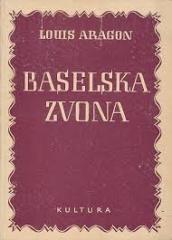
Baselska zvona

Baselska zvona

Louis Aragon

The novel follows three women: Diane, a noblewoman; Catherine Simonidzé, a feminist; and the real Clara Zetkin, a communist. Through their destinies, the crisis of bourgeois society, women's emancipation, and the path to communism are depicted.

Kultura, 1946.
Serbian. Latin alphabet. Hardcover.
5.76