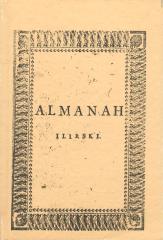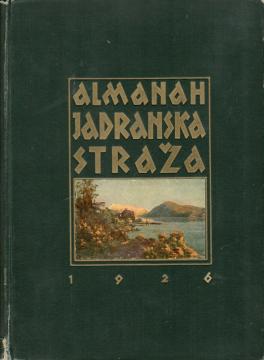
Almanah Jadranske straže za 1926. godinu
The Adriatic Guard Almanac for 1926 contains texts about the Adriatic 1915–1925, war experiences, the historical role of the army, a royal visit to the coast, and studies on Tomislav and Croatian monuments. The collection is a cultural and patriotic overv
The Adriatic Guard Almanac for 1926 is a representative annual publication of one of the most important organizations of the interwar period dedicated to promoting the cultural, historical and political significance of the Adriatic for the then state. The almanac brings together prose, historical essays, travelogues, war records and poems by leading authors from Split, Zagreb, Belgrade and other cities, creating a comprehensive overview of the events, ideas and emotions that marked the area of the eastern Adriatic from the First World War to the mid-1920s.
The introductory part includes a dedication to Prince Petar, a preface by Juraj Biankini and a section on Memorials, which set the thematic framework of the book – the Adriatic as a symbol of state unity, historical heritage and wartime victims. The first large section, White Eagles on the Adriatic, brings testimonies of the Albanian Golgotha, the trials of the Serbian army, the arrival of forces on the Adriatic, and poetic and prose reflections on the victims of the war. The works of Živko Devčev, General Mile J. Nikolajević, Stjepan Roca and others offer an impressive blend of personal experience and historical document.
The second section, The Historical Visit of Their Majesties the King and Queen to Our Liberated Sea, describes the royal visit to the Dalmatian coast after unification. Grga Novak, Jerko Čulić, Stanislav Krakov and Dr. J. S. Grujić present the historical symbolism of the monarchy's encounter with the "liberated sea", emphasizing the renewed ties between the interior and the Adriatic cities. Vladimir Nazor's poem sets an emotional tone, linking cultural tradition to the newly emerging political situation.
The third section, Historical Days on the Adriatic 1925, features works by Frano Bulić on King Tomislav and Lovro Katić on the historical monuments of Split and Knin. These texts highlight the depth of Croatian presence on the eastern coast of the Adriatic, providing an archaeological-historical basis that complements contemporary political narratives.
Due to the diversity of authors, documentary character, and wealth of cultural and historical themes, the almanac is a valuable source for studying the interwar period, relations towards the Adriatic, and the intellectual and political climate of the 1920s.
One copy is available
- Slight damage to the cover