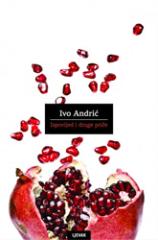
Božji međaši: Pripovijest iz Istre
Rare book
Antique

Božji međaši: Pripovijest iz Istre

Ivan Pregelj

Ivan Pregelj (1883–1960), a Slovenian writer, professor, and Catholic intellectual, briefly taught at the Pazin Gymnasium. The fruit of that experience was the story Božji mejniki (God's Milestones) (1925), later published under the title Plovan pre Šime.

God's Boundaries (1925) is a story from Istria about the Croatian priest Don Šime Križmanić (named after Šime). Inspired by Bishop Juraj Dobrila, he fights for the spiritual, social and national awakening of the Istrian Croatian people in the midst of poverty, Italian pressure and church passivity in the 19th century. The work emphasizes faith as the driving force behind "God's Boundaries" – the boundaries of justice and identity.

The plot is set in the 19th century, during the time of Bishop Juraj Dobrila, the great Istrian revivalist. The main character is a young priest Šime Križmanić from Ježenje (like Dobrila). After his ordination, he works in Trieste following his role model, and then temporarily comes to Istria to replace the sick parish priest of Tinjan. Instead of a short stay, he stays longer and dedicates himself to intensive pastoral and social work.

Pregelj realistically and with deep compassion depicts the difficult life of the Istrian Croatian peasantry – material misery, spiritual neglect, national oppression under Italian influence and often passivity of the clergy. Don Šime implements Dobrila's model: active action that combines the vertical of faith (prayer, consolation) with the horizontal of social care. He organizes, teaches, raises spirits, faces resistance and challenges, but does not give up. Faith is not abstract, but active – it builds "God's boundaries", the boundaries of dignity, harmony and national identity.

The style is typical of Pregelj: expressionistic charge, psychological depth, Catholic ethics and national romanticism. The work belongs to the genre of historical/peasant narrative with criminal and social elements, but above all it is a hymn to the priestly vocation in the service of the people. It was popular among Croats in Istria even during the Italian occupation, because it strengthened identity.

The book is an important document on the Istrian Renaissance, Catholic social activism, and the role of priests as national leaders. Today, it is read as a testament to regional history and a universal message of engaged faith.

Original title
Božji mejniki
Translation
Petar Grgec
Editor
Josip Andrić
Dimensions
19 x 12 cm
Pages
128
Publisher
Hrvatsko književno društvo Sv. Jeronima, Zagreb, 1925.
 
Latin alphabet. Hardcover.
Language: Croatian.

One copy is available

Condition:Unused
Damages or inconvenience notice:
  • Signature of previous owner
 

Are you interested in another book? You can search the offer using our search engine or browse books by category.

You may also be interested in these titles

Štefan Golja i njegovi

Štefan Golja i njegovi

Ivan Pregelj

"Štefan Golja and His Men" is a novel by Slovenian writer Ivan Pregelj from 1928. The work is set in the historical context of the Tolmin Peasants' Revolt of 1713, providing deep insight into the social and spiritual challenges of the time.

Spektar, 1974.
Croatian. Latin alphabet. Hardcover.
2.94 - 3.99
Sa osmijeha

Sa osmijeha

Pavao M. Rakoš

U svojoj zbirci kratkih priča i novela „Sa osmehom“ (1927), Pavao M. Rakoš donosi intimne, svakodnevne slike života prožete nežnim lirizmom, refleksijom, suptilnim emocijama.

Vlastita naklada, 1927.
Croatian. Latin alphabet. Paperback.
4.26 - 4.28
Cvijet pod staklom

Cvijet pod staklom

Antun Matasović

„Cvet pod staklom“ Antuna Matasovića je zbirka kratkih priča, koja predstavlja rane priče slavonskog katoličkog pisca sa motivima porodice, ljubavi, svakodnevnog života i moralnih dilema. Klasično regionalno štivo između dva rata.

Vlastita naklada, 1921.
Croatian. Latin alphabet. Paperback.
11.48
Turopoljski top / Prijan Lovro / Zvonar topdžija / Do tri puta bog pomaže / Blijedi mjesec / Kako došlo tako prošlo

Turopoljski top / Prijan Lovro / Zvonar topdžija / Do tri puta bog pomaže / Blijedi mjesec / Kako došlo tako prošlo

August Šenoa

Knjiga 18 Sabranih dela Augusta Šenoe donosi izbor njegovih najpopularnijih humorističkih, satiričnih i romantičnih priča. Živopisne slike Turopolja, Zagreba i provincije pune duhovitosti, ironije i topline.

Naklada knjižare Preporod, 1943.
Croatian. Latin alphabet. Hardcover.
8.32
Proljeće u Badrovcu

Proljeće u Badrovcu

Vladan Desnica

Proljeće u Badrovcu (1955), prvo izdanje zbirke kratkih priča Vladana Desnice. Lirsko-refleksivne priče iz dalmatinskog kraja, koje je Desnica napisao pedesetih godina 20. veka, fokusirale su se na dalmatinska sela u posleratnom haosu.

Prosveta, 1955.
Croatian. Cyrillic alphabet. Hardcover.
9.58
Pijanac

Pijanac

Mijat Stojanović

„Pijanica“ Mijata Stojanovića (1869) je narodna priča adaptirana po I. A. Štelcigu. Moralistička priča o štetnim posledicama alkoholizma, namenjena široj javnosti. Klasičan primer prosvetiteljske književnosti 19. veka.

Hrvatsko književno društvo Sv. Jeronima, 1869.
Croatian. Latin alphabet. Hardcover.
32.46