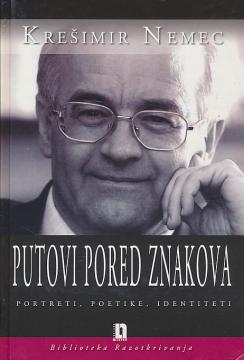
Putovi pored znakova

Putovi pored znakova

Krešimir Nemec

The book deals with various topics from recent Croatian literature, which have in common the search for poetic origins of certain problems and the analysis of cultural and gender identities.

The Imperial Diploma of 20 October 1860 marked the end of Bach's absolutism, one of the darkest periods in recent Croatian history, a period marked in literature by the suppression of Renaissance enthusiasm, cultural depression, Germanization and regression. In the 1860s, cultural life began to develop more freely again, and a new impetus was observed in all areas. A breath of freedom, after decades of discipline, was also felt in literature. A new generation of writers entered the literary scene, who would set the basic tone for Croatian literature in the next two decades. The new generation gathered mainly around the magazines "Naše gore list" (founded in 1861 by the Zagreb merchant Mijo Krešić) and "Glasonoša" (founded in Karlovac by the printer Abel Lukšić, also in 1861). If we also mention the fact that in 1863 Ljudevit Gaj renewed "Danica" (which was published until the end of 1867), then the publication of the newspapers "Književnik", "Slavonac", "Dragoljub", and from 1869 also "Vienca", it is obvious that the conditions were gradually being created for a more developed and differentiated literary life....

Editor
Nives Tomašević
Graphics design
Luka Gusić
Dimensions
23.5 x 16 cm
Pages
328
Publisher
Naklada Ljevak, Zagreb, 2006.
 
Latin alphabet. Hardcover.
Language: Croatian.

One copy is available

Condition:Used, excellent condition
Discounted price: 8.156.11
25% discount is valid until 8/4/26 11:59 pm
 

Are you interested in another book? You can search the offer using our search engine or browse books by category.

You may also be interested in these titles

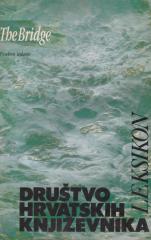
Društvo hrvatskih književnika- leksikon

Društvo hrvatskih književnika- leksikon

Tihomil Maštrović, Krešimir Nemec, Slobodan Novak, Zdravko Zima

At a time when Croatian writers abroad were often presented only as "Yugoslav", this lexicon clearly and systematically presented Croatian literature as a separate national literature for the first time after World War II.

Mladost, 1991.
Croatian. Latin alphabet. Paperback.
6.60 - 6.62
O literaturi

O literaturi

Maksim Gorki

The first third of the book provides reviews of Russian literature (Chekhov, Ljeskov, Pushkin...). The second chapter deals with world literature (Balzac, Stendhal, Roland...), and the third chapter contains general articles.

Kultura, 1949.
Serbian. Latin alphabet. Hardcover.
5.12
Hrvatski fantastičari: Jedna književna generacija

Hrvatski fantastičari: Jedna književna generacija

Jurica Pavičić

This is one of the first synthetic analyses of the so-called Croatian fantasy generation (or "Borgesians", "young prose" with elements of fantasy) that appeared in the late 1960s and during the 1970s.

Zavod za znanost o književnosti Filozofskoga fakulteta, 2000.
Croatian. Latin alphabet. Paperback.
9.72
Dijalozi i eseji

Dijalozi i eseji

Giacomo Leopardi

The book is a collection of selected texts from Leopardi's monumental works Zibaldona and Operetta Morali.

Zora, 1961.
Croatian. Latin alphabet. Hardcover with dust jacket.
4.98
Duh impresionizma i secesije : Hrvatska moderna

Duh impresionizma i secesije : Hrvatska moderna

Viktor Žmegač

Žmegač does not only talk about the visual arts, but about the "spirit" of the era that permeates literature: sensuality, the moment, subjectivity, decorativeness, eroticism, decadence, but also the crisis of identity in the fin-de-siècle atmosphere.

Zavod za znanost o književnosti Filozofskoga fakulteta, 1993.
Croatian. Latin alphabet. Paperback.
8.26
Teorija književnosti

Teorija književnosti

Rene Wellek, Waren Austin

Written on the basis of the most contemporary achievements of modern literary theory and criticism, this book is not only a living theory of literature, but also a critical anthology of literary theories.

Nolit, 1974.
Serbian. Latin alphabet. Hardcover.
5.72