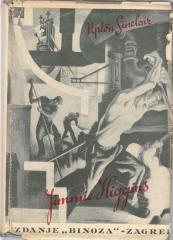
Zlatni lanac
Upton Sinclair sharply criticizes the relationship between art and capital throughout history. He shows how money and power have always influenced literature, painting, and music, and how great artists were often prisoners of the "golden chain."
The Golden Chain (1925) Upton Sinclair is a polemical and provocative book in which the author applies his characteristic social critical view to the field of art and literature. Sinclair claims that art has never been free from the influence of money and power.
Through a series of essays and examples from history, he shows how the greats of world literature, painting and music (from ancient times to modern writers) were often forced to serve rulers, the church or the rich in order to survive. The “Golden Chain” becomes a symbol of the artists’ slavery under the rule of Mammon – the god of wealth.
The book is written in Sinclair’s usual sharp, direct and engaging style. The author spares neither classical writers nor contemporary writers, accusing them of often being servants of the ruling class. At the same time, he highlights those rare artists who dared to speak the truth about social injustices.
This is not fiction, but literary criticism and social study with a clear socialist stance. The work caused great controversy in its time and was widely read in left-wing circles.
The Croatian edition from 1932 is today relatively rare and sought after among collectors of Sinclair's works and fans of engaged literature between the two wars. The book is considered one of Sinclair's most significant publicistic works available in Croatian.
We recommend it to everyone who loves Sinclair (Kralj uglja, Nafta!, Džungla), engaged essays and criticism of capitalism in art. A provocative and intellectually stimulating read that still arouses debate today.
One copy is available
- The cover is missing
- Yellowed pages
- Traces of patina