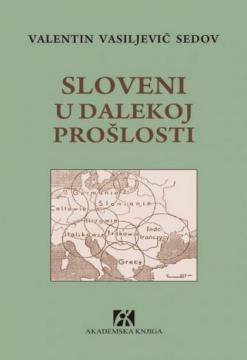
Sloveni u dalekoj prošlosti

Sloveni u dalekoj prošlosti

Valentin V. Sedov

A fundamental archaeological and historical work on the ethnogenesis of the Slavs from the 2nd millennium BC to the middle of the 1st millennium AD. The author reconstructs the origins, culture, and early migrations of the Slavs based on archaeological fi

Slavs in the distant past is one of the most important and most cited works by the Russian archaeologist and academic Valentin Vasilyevich Sedov (1924–2004), a leading expert on Slavic ethnogenesis in the second half of the 20th century.

The book is a comprehensive synthesis of archaeological, linguistic and historical data on the earliest history of the Slavs. Sedov traces the process of the separation of the Slavs from the common ancient European community, their development in the period before the Great Migration of Peoples, and the formation of the Slavic ethnic and linguistic community. He pays special attention to archaeological cultures that he associates with the Slavs (e.g. Zarubinka, Chernyakhovsk, Prague culture), their settlements, material culture, funeral customs and relations with neighboring peoples (Balts, Germans, Iranians, Finns).

The work is written systematically and scientifically, with rich maps and illustrations. It represents a classic work of the so-called of the Soviet/Russian archaeological school, which emphasizes the indigenous development of the Slavs in Eastern Europe, while accepting certain migratory elements.

The book is comprehensive and is considered required reading for anyone interested in Slavic prehistory, archaeology, and the early Middle Ages. Although some of the theses have now been partially revised by new genetic research, Sedov's work remains a fundamental reference work in the field.

Original title
Славяне в древности
Translation
Draginja Ramadanski, Milica Spasić, Nenad Spasić
Editor
Bora Babić
Dimensions
23 x 15 cm
Pages
496
Publisher
Akademska knjiga, Novi Sad, 2012.
 
Latin alphabet. Hardcover.
Language: Serbian.

One copy is available

Condition:New
 

Are you interested in another book? You can search the offer using our search engine or browse books by category.

You may also be interested in these titles

Opuscula archaeologica IV: Zlatni nakit iz helenističko-ilirske nekropole u Budvi

Opuscula archaeologica IV: Zlatni nakit iz helenističko-ilirske nekropole u Budvi

Duje Rendić-Miočević

The article presents a classic analysis of archaeological findings from the Hellenistic period (3rd-2nd century BC) in the necropolis north of ancient Budva (today's Montenegro), discovered in the 1950s.

Filozofski fakultet Sveučilišta u Zagrebu, 1959.
Croatian. Latin alphabet. Paperback.
9.367.02
Kraj vremena: Revizija proročanstva Maya

Kraj vremena: Revizija proročanstva Maya

Adrian Gilbert

British author Adrian Gilbert (co-author of The Mayan Prophecies from 1995) in The End of Time offers the most thorough and sober modern interpretation of the Mayan calendar and the so-called "2012 prophecy", completely rejecting New Age hysteria.

Stari grad, 2009.
Croatian. Latin alphabet. Hardcover.
18.2214.58 - 18.2614.61
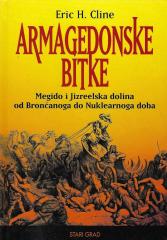
Armagedonske bitke: Megido i Jizreelska dolina od Brončanoga do Nuklearnoga doba

Armagedonske bitke: Megido i Jizreelska dolina od Brončanoga do Nuklearnoga doba

Eric H. Cline

The book by a world-renowned archaeologist and historian explores Megiddo (Hebrew: Har Megiddo, Greek: Armageddon) and the Jezreel Valley as the bloodiest battlefield in world history. Over 4,000 years, 34 major battles were fought in this strategic pass.

Stari grad, 2005.
Croatian. Latin alphabet. Hardcover.
15.2210.65 - 15.3610.75
Metamorfoze Ruskog Carstva 1721. - 1921.: Geopolitika, ode i narodi

Metamorfoze Ruskog Carstva 1721. - 1921.: Geopolitika, ode i narodi

Andrzej Nowak

A historical study of the transformations of the Russian Empire from Peter the Great to the early USSR, focusing on imperial geopolitics, ideological patterns, and relations with peoples within the empire.

Fortuna d.o.o., 2023.
Croatian. Latin alphabet. Hardcover.
35.00
Zagonetka podunavske civilizacije

Zagonetka podunavske civilizacije

Harald Haarman

Harald Haarmann's book presents the discovery of Europe's oldest highly developed culture (c. 5500–3500 BC), known as the Danube or Old European Civilization, with an emphasis on its writing, art and influence.

Akademska knjiga, 2019.
Croatian. Latin alphabet. Paperback.
27.00
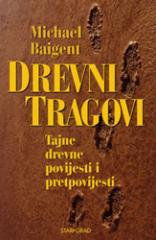
Drevni tragovi: Tajne drevne povijesti i pretpovijesti

Drevni tragovi: Tajne drevne povijesti i pretpovijesti

Michael Baigent

In the book Ancient Traces, New Zealand author Michael Baigent (co-author of the bestseller Holy Blood, Holy Grail) presents the provocative thesis that the official history of humanity is incomplete and that there is a hidden, much older layer of civiliz

Stari grad, 2005.
Croatian. Latin alphabet. Hardcover.
15.2210.65 - 15.44