Policija sjećanja

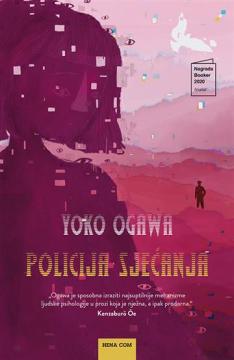
Policija sjećanja

Yoko Ogawa

On an island where things and memories gradually disappear, the writer hides a man who still remembers, fighting against a system that erases the past and identity.

Memory Police by Japanese author Yoko Ogawa is a compelling dystopian novel that explores the relationship between memory, identity, and power. The plot is set on an isolated island where objects, concepts, and memories suddenly disappear from the lives of its inhabitants. After each disappearance, people forget that a certain thing ever existed, while the mysterious Memory Police oversee the enforcement of forgetting** and eliminate anyone who can still remember the lost.

The main character, a young writer, is one of the few who begins to question the world she lives in. When she discovers that her editor has the ability to retain memories, she decides to hide it from the authorities, aware of the danger to which both of them are putting their lives. At the same time, she continues to write a novel that mirrors her reality and deepens the themes of loss and silence.

With a subtle, melancholic style, Ogawa builds an atmosphere of uncertainty in which the gradual disappearance of memories becomes a metaphor for repression, censorship, and the fragility of human identity. Memory Police is both a tense story and a philosophical meditation on what remains of a person when their past, language, and memories are taken away.

Original title
The Memory Police
Translation
Matija Pospiš
Editor
Nermina Husković
Illustrations
Ana Salopek
Graphics design
Jasna Goreta
Dimensions
22 x 14.5 cm
Pages
255
Publisher
Hena Com, Zagreb, 2026.
 
Latin alphabet. Hardcover with dust jacket.
Language: Croatian.

One copy is available

Condition:Unused
 

Are you interested in another book? You can search the offer using our search engine or browse books by category.

You may also be interested in these titles

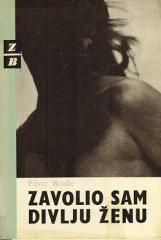
Zavolio sam divlju ženu

Zavolio sam divlju ženu

Pierre Boulle

The novel originally titled La Planete des singes, which was the basis for the 1968 film Planet of the Apes.

Epoha, 1965.
Croatian. Latin alphabet. Hardcover with dust jacket.
5.98 €
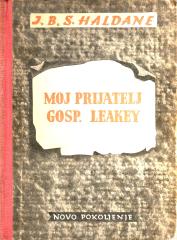
Moj prijatelj gospodin Leakey

Moj prijatelj gospodin Leakey

J. B. S. Haldane

J. B. S. Haldane (1892–1964), a British geneticist, evolutionary biologist, and science popularizer, wrote "My Friend Mr. Leakey" in 1937 – a collection of five humorous, fantastic stories for children (and adults).

Novo pokoljenje, 1950.
Croatian. Latin alphabet. Hardcover.
7.54 €
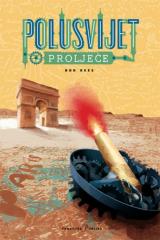
Polusvijet: Proljeće

Polusvijet: Proljeće

Rod Rees

Investigator Ella Thomas is trapped in HalfWorld, a dangerous computer simulation. In the second installment of the series, she must survive a religious war and thwart a tyrant's sinister plan that threatens the real world as well.

Fraktura, 2013.
Croatian. Latin alphabet. Hardcover with dust jacket.
17.98 €
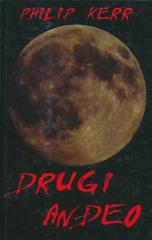
Drugi anđeo

Drugi anđeo

Philip Kerr

Philip Kerr, one of the finest techno-thriller writers, used a near-future setting to present us with the fascinating world of medicine, intertwined within a tense plot.

Škorpion, 2000.
Croatian. Latin alphabet. Hardcover.
9.99 €
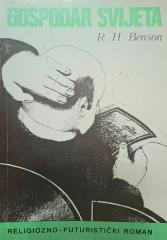
Gospodar svijeta

Gospodar svijeta

Robert-Hugh Benson

This is a book for anyone who wants to ask themselves about the future of a world in which power, concentrated in the hands of an ever-narrower circle of people, attempts to destroy or marginalize everything that is different.

Kršćanska sadašnjost, 1975.
Croatian. Latin alphabet. Paperback.
6.855.14 €
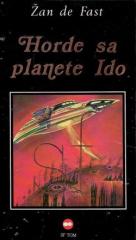
Horde sa planete Ido

Horde sa planete Ido

Jan de Fast

The atmosphere seems dark and tense, with themes of the collapse of civilization, fear of the unknown, and the conflict between science and superstition.

Dečje novine, 1980.
Serbian. Latin alphabet. Paperback.
4.00 €