Vrata percepcije / Raj i pakao
Huxley's essays "The Gates of Perception" and "Heaven and Hell" explore the experience of altered consciousness, the relationship between mind and reality, and the possibilities of human perception through philosophical and psychological reflections.
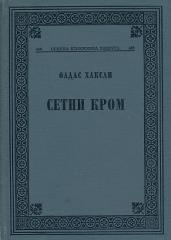
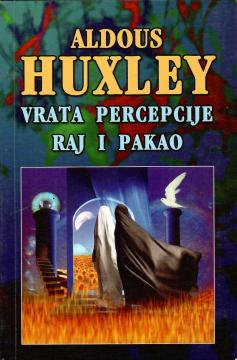
The book The Doors of Perception/Heaven and Hell by British writer and thinker Aldous Huxley brings together two of his most famous essays dedicated to the exploration of human consciousness, perception, and the limits of ordinary experience. The first essay, The Doors of Perception (1954), is based on Huxley's personal experience with mescaline and brings reflections on altered states of consciousness, art, religion, and the way the human mind shapes the experience of the world.
Huxley starts from the idea that everyday consciousness represents a kind of filter that limits the amount of information a person receives, while certain experiences can open up different ways of perceiving reality. He pays special attention to the intense experience of colors, shapes, and objects, and connects such experiences with artistic creation and mystical traditions.
The second essay, Heaven and Hell (1956), expands on these considerations by analyzing visions, symbolism, religious experiences, and artistic representations of the sublime and terrifying. Huxley compares different cultural traditions and explores how humans shape their ideas about heaven, hell, and transcendence.
This book is not just a record of altered states of consciousness, but also a philosophical discussion of the nature of the human mind, creativity, and the search for a deeper understanding of reality. Huxley's essays connect literature, psychology, philosophy, and religious thought, raising questions that have profoundly influenced discussions of consciousness and human experience in the 20th century.
One copy is available